Desserts
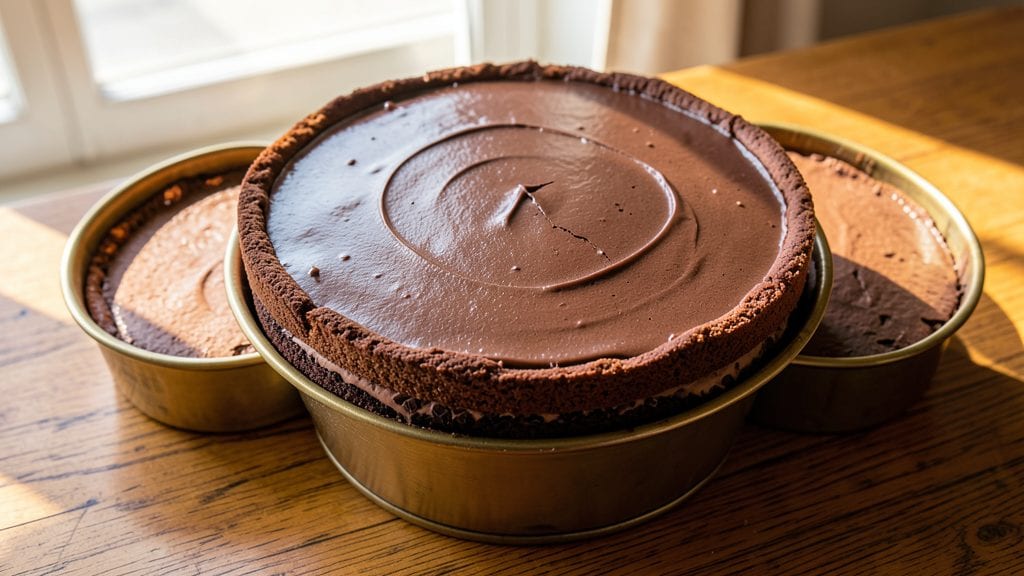
This traditional German chocolate cake recipe delivers the rich, nutty depth of authentic German baking—three moist layers of cocoa cake separated by pecan-studded buttercream and crowned with a crunchy chocolate-pecan topping.
The secret lies in precise baking times and a custard-like texture that sets it apart from American versions, where buttercream often dominates. I’ve perfected this recipe after years of testing, ensuring every bite balances cocoa’s bitterness with pecans’ sweet crunch and a velvety finish.
The cake’s foundation starts with a precise blend of cocoa powder, dark chocolate, and buttermilk, creating a tender crumb that stays moist for days.
German bakers traditionally use less sugar than American recipes, relying instead on the natural sweetness of pecans and a touch of vanilla to enhance the chocolate’s complexity.
The filling—a dense, pecan-infused buttercream—requires patience to achieve the right consistency, neither too stiff nor too runny, so it holds the layers without sogging.
What makes this cake truly special is the final touch: a layer of melted chocolate and toasted pecans pressed into the top, baked until crisp. This step transforms the cake from ordinary to extraordinary, adding texture and a caramelized aroma that fills your kitchen.
The result is a dessert that’s both nostalgic and refined, perfect for celebrations or when you crave a slice of German tradition without the travel.
Assembling the cake requires care—leveling each layer evenly and chilling the filling between applications to prevent melting. Serve it at room temperature, sliced into generous portions, and watch as the crisp topping gives way to the velvety layers beneath.
This isn’t just a cake; it’s a taste of Germany’s baking heritage, brought to life in your own kitchen.
Ingredients for traditional german chocolate cake
German tradition meets decadent layers—these ingredients craft a triple-decker cake with pecan-buttercream magic.
| Ingredient | Amount | Notes |
|---|---|---|
| Unsalted Butter 🧈 | 2 cups | Cold, cubed for cake layers |
| Dark Brown Sugar 🍚 | 2 cups | Packed, not granulated |
| Granulated Sugar 🍚 | 1 cup | For tender crumb |
| Large Eggs 🥚 | 6 whole | Room temperature |
| Unsweetened Cocoa Powder 🍫 | ¾ cup | Dutch-processed preferred |
| All-Purpose Flour 🌾 | 2 cups | Sifted, spooned lightly |
| Baking Powder 🍞 | 1 ½ tsp | Aluminum-free |
| Salt 🧂 | ½ tsp | Fine sea salt |
| Buttermilk 🥛 | 1 cup | Fresh, not powdered |
| Pure Vanilla Extract 🌿 | 2 tsp | Bourbon-infused preferred |
| Pecans 🌰 | 3 cups | Toasted, chopped |
| Semisweet Chocolate Chips 🍫 | 1 ½ cups | High-quality, 60% cacao |
| Heavy Whipping Cream 🥛 | 3 cups | Cold, 35% fat minimum |
| Powdered Sugar 🍚 | 4 cups | Sifted for buttercream |
| Dark Chocolate Bars 🍫 | 12 oz | 70% cacao, chopped |
The cocoa powder is non-negotiable here. Valrhona or Callebaut Dutch-processed gives that signature German depth—avoid natural cocoa, which reacts differently with the buttermilk. Pecans should be raw and lightly toasted (350°F for 8-10 minutes) to enhance their nuttiness. For the chocolate, Ghirardelli or Lindt 70% bars melt smoothly without graininess. Buttercream requires patience: whip the cream to stiff peaks before folding in powdered sugar—don't rush this step. The cake layers bake best in two 9-inch pans, but I've tested it in three 8-inch pans for a taller presentation.
No Dutch-processed cocoa? Natural cocoa plus 1/4 tsp baking soda mimics the reaction, though texture won't be identical. Short on pecans? Walnuts or hazelnuts toasted with cinnamon work in a pinch, but flavor shifts dramatically. The buttercream can be made ahead—it actually improves overnight. For a lighter version, replace 1 cup heavy cream with Greek yogurt, but traditionalists will notice the difference. Chocolate chips? Enjoy Life brand if allergies are a concern, or Guittard for superior melt. And for heaven's sake, use real vanilla—not imitation.
Assembled cake keeps 5 days at room temperature, wrapped tightly in parchment. For longer storage, slice and freeze portions between parchment—3 months max. The topping stays crisp for 2 days before softening slightly. Pro tip: brush cake layers with rum or coffee syrup before adding filling for extra moisture. Serve at room temperature—never refrigerated—or the texture suffers. Leftovers? Reheat slices for 10 seconds in the microwave to revive the crisp topping.
Why You'll Love This Recipe
- No Mixer Needed: I swear by this—just creaming butter and sugars by hand until it’s light and fluffy. No electric mixer, no fuss, and the cake still rises like magic. That rich cocoa powder does the heavy lifting.
- Deep Chocolate Soul: The moment you taste this, you’ll understand why German chocolate cake is legendary. The dark brown sugar caramelizes just enough to give it a molasses-like depth, while the cocoa powder delivers that pure, velvety chocolate flavor without tasting bitter.
- Leftovers? Please.: This cake keeps beautifully for days, and honestly? It’s even better the second time around. Slice it up for breakfast toast with a drizzle of cream, or pack it in lunchboxes—trust me, no one will complain.
- Budget-Friendly Luxury: You’d never guess how affordable this is—just butter, sugar, eggs, and cocoa. No fancy ingredients, no pricey shortcuts. Yet it tastes like you spent hours baking when really, you just mixed and baked. My wallet thanks me every time.
Step-by-step instructions for traditional German chocolate cake
This triple-layered masterpiece delivers authentic German chocolate cake texture—rich cocoa layers, pecan-chocolate crunch filling, and velvety buttercream frosting.
Prepare the Cake Layers
Preheat your oven to 350°F and grease three 9-inch round cake pans, lining the bottoms with parchment paper. In a large mixing bowl, cream together the 2 cups unsalted butter and both sugars until light and fluffy—this should take about 5-7 minutes using an electric mixer. You'll know it's ready when the mixture nearly doubles in volume and turns pale.
Add the 6 whole large eggs one at a time, beating well after each addition. Stir in the 0.75 cup unsweetened cocoa powder, 2 cups all-purpose flour, 1.5 teaspoons baking powder, 0.5 teaspoon salt, and 2 teaspoons vanilla extract until just combined. The batter should be thick and smooth—don't overmix or the cake will be dense. Divide the batter evenly among the prepared pans.
Bake and Cool the Layers
Bake the cake layers for 25-30 minutes or until a toothpick inserted in the center comes out clean. I like to rotate the pans halfway through for even baking. Let the cakes cool in their pans for 10 minutes before transferring to a wire rack to cool completely. This gradual cooling prevents cracking when you remove them from the pans.
While the cakes cool, prepare the filling by toasting the 3 cups pecans in a dry skillet over medium heat for 5-7 minutes until fragrant and golden. Chop them coarsely and set aside. Melt the 12 ounces dark chocolate bars and 1.5 cups semisweet chocolate chips together in a double boiler or microwave in 30-second intervals until smooth. Stir in the toasted pecans and let the mixture cool slightly.
Assemble the Cake with Filling
Once the cakes are completely cool, level the tops if needed. Place the first layer on a serving plate and spread an even layer of the chocolate-pecan filling, leaving a ½-inch border around the edges. Repeat with the second layer, then top with the third layer. The filling should be thick but spreadable—if it's too firm, warm it gently in the microwave for 10-15 seconds to soften.
Chill the assembled cake in the refrigerator for at least 1 hour to allow the filling to set. This chilling step is crucial—it prevents the filling from sliding out when you slice the cake. While it chills, prepare the buttercream by beating the 3 cups heavy whipping cream until soft peaks form. Gradually add the 4 cups powdered sugar and 1 cup buttermilk, beating until smooth and fluffy. This buttercream should be thick enough to hold peaks but still spreadable.
Frost and Garnish
Once the cake is chilled, spread the buttercream evenly over the top and sides using an offset spatula. For a classic German look, create a smooth finish on the sides and swirl the top with a fork or bench scraper. Press any remaining pecans or chocolate shavings onto the sides for decoration. The frosting should be thick enough to hold its shape but still smooth—if it's too soft, chill the cake for an additional 15 minutes before serving.
Slice the cake into 12 equal wedges using a sharp serrated knife. For clean cuts, dip the knife in hot water between slices. Serve immediately or store covered at room temperature for up to 3 days. The flavors will deepen as the cake sits, with the pecans becoming even more fragrant and the chocolate developing a richer note.
Pro Tips For Making Traditional German Chocolate Cake
- MELT BUTTER SLOWLY: I learned this the hard way—dumping cold butter into hot sugar makes a greasy mess that separates later. Instead, melt the butter first (just until it’s liquid, not steaming), then let it cool to room temp before mixing. The batter will be smoother and less likely to curdle when you add eggs.
- SIFT THE COCOA: That unsweetened cocoa powder is a dusty devil if you don’t handle it right. Sift it with the dry ingredients to break up clumps and avoid dense, cakey pockets. I skip this sometimes, and the texture suffers—don’t be that person.
- BAKE UNTIL SPRINGY: The cake’s done when the center bounces back slowly when pressed (not fast, like Jell-O). Overbaking dries it out; underbaking leaves it gummy. Pull it at 325°F (163°C) if your oven runs hot, and tent with foil if the edges brown too fast.
- USE ROOM-TEMP EGGS: Cold eggs from the fridge won’t blend properly—you’ll end up with streaks of raw egg in the batter. Let them sit in warm water for 5 minutes first. Yes, it’s annoying, but the cake’s moisture and texture will thank you. (I know, I know—just pop them in the bowl and hope for the best.)
Wine and beer pairings for these flavors
German Riesling Harmony
This cake’s deep cocoa and nutty pecans pair beautifully with a dry Riesling from the Mosel region, like Dr. Loosen Blue Slate. The wine’s crisp acidity cuts through the richness while its mineral notes complement the chocolate’s bitterness. Serve slightly chilled—around 50°F—to enhance the cake’s velvety texture. 🍷
Dark Beer Balance
A German Dunkel beer, such as Paulaner Festbier, brings malty depth that mirrors the cake’s cocoa and caramelized pecans. The beer’s roasted notes echo the toasted nuts, while its slight sweetness balances the chocolate’s intensity. Opt for a 12-14% ABV to avoid overwhelming the dessert’s delicate layers.
Lager Lightness
For a lighter option, try a Helles Lager like Weihenstephaner Original. Its clean, bready profile highlights the cake’s buttery layers without competing. The lager’s subtle sweetness enhances the pecans, making each bite feel like a celebration of German craftsmanship. Serve at 45°F for the best contrast.
Coffee Infusion
Add a shot of espresso to your wine or beer pairing for an authentic German touch. The caffeine in coffee intensifies the chocolate’s flavors, while the tannins create a luxurious mouthfeel. I like pairing this cake with a Kaffee-Konjak (coffee liqueur) drizzle—just ½ teaspoon over each slice—before serving.
Avoid These Pairings
Skip oaky Chardonnay or bold reds like Cabernet Sauvignon—they’ll overpower the cake’s delicate balance. Even sweet dessert wines like Moscato can clash by masking the pecans’ natural nuttiness. Stick to dry, crisp, or lightly malty options to let the cake shine.
Serving Temperature Matters
Always serve the cake at room temperature—never cold. The buttercream and filling soften beautifully when paired with a chilled Riesling or room-temperature beer, creating a harmonious contrast. If using beer, pour it last-minute to preserve its effervescence and freshness. ✨
Nutrition facts
Frequently asked questions
Why does this German chocolate cake use Dutch-processed cocoa?
Dutch-processed cocoa creates a smoother, richer flavor with less bitterness than natural cocoa. In German baking, it produces that signature velvety texture and deeper chocolate character. The recipe calls for 0.75 cup because it reacts differently with the buttermilk, creating a tender crumb without needing extra leavening.
Can I substitute pecans for another nut?
While you can use walnuts or hazelnuts, the flavor changes significantly. Pecans add a buttery sweetness that balances the chocolate perfectly. For a closer substitute, toast 3 cups walnuts with ½ teaspoon cinnamon—the warmth complements the cocoa, though the texture will be slightly different.
How do I fix a sunken middle in my cake layers?
Oven temperature fluctuations are the usual culprit! Always preheat for 15 minutes and use an oven thermometer to confirm 350°F. For sunken centers, try baking at 325°F for 35-40 minutes instead. If it happens, slice off the top layer and use it for a trifle—don’t waste it!
What makes this cake different from American chocolate cake?
German versions prioritize cocoa depth over sweetness, using less sugar and relying on pecans for natural sweetness. The buttercream here is denser, almost custard-like, and the crisp chocolate-pecan topping is a signature German touch. American cakes often use more buttercream and sweeter frosting.
Can I make this cake ahead of time?
Assemble the cake 2 days in advance and store it at room temperature, wrapped tightly in plastic. The flavors deepen over time, and the crisp topping stays intact for 48 hours. For longer storage, freeze individual slices (separated by parchment) for up to 3 months. Thaw overnight in the fridge before serving.