
Desserts
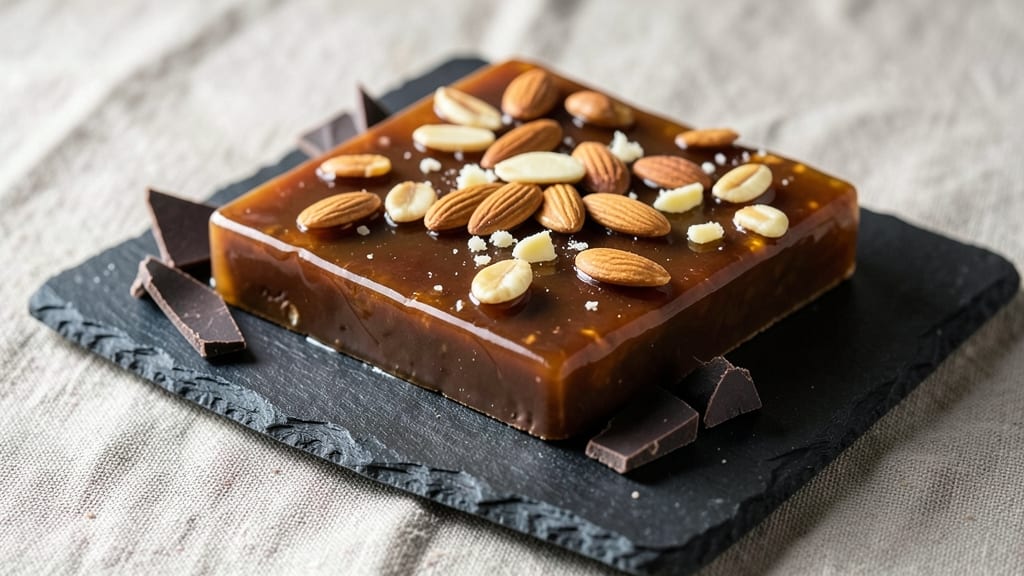
This chocolate torrone recipe delivers the perfect balance of crispy honeycomb texture and rich, velvety chocolate—traditional Spanish nougatine with a modern twist. The secret lies in carefully cooked sugar and whipped egg whites, creating a delicate lattice that holds together like a dream.
I’ve perfected this version after years of experimenting, ensuring every bite has that signature crunch and caramelized sweetness.
The process begins with cooking sugar to the soft-ball stage, a technique that transforms simple ingredients into something extraordinary. Whipped egg whites and melted chocolate are folded in gently to maintain that signature airy-yet-crunchy texture.
The result is a confection that’s rich enough to satisfy chocolate lovers but light enough to enjoy in small pieces—ideal for gifting or indulging yourself.
What makes this recipe special is its versatility. You can add toasted almonds or hazelnuts for extra crunch, or infuse it with orange zest for a bright citrus note.
Once set, it keeps beautifully in an airtight container, making it perfect for holiday gifts or stashing in your pantry for those moments when you crave something sweet yet sophisticated.
Whether you’re making it for a special occasion or just because you love baking, this torrone is a showstopper. The combination of honey, chocolate, and nuts creates layers of flavor that linger long after the last bite. Let’s get started on creating your own batch of this timeless treat.
Ingredients for chocolate torrone
Sweet, nutty, and perfectly crunchy—this torrone needs just 11 ingredients for pure indulgence.
| Ingredient | Amount | Notes |
|---|---|---|
| Dark Chocolate Bars 🍫 | 12 oz | 70% cocoa or higher, chopped |
| Honey 🍯 | 1 cup | Raw, unfiltered preferred |
| Granulated Sugar 🍚 | 1 ½ cups | Diamond Crystal preferred |
| Large Egg Whites 🥚 | 5 whole | Room temperature, pasteurized |
| Toasted Almonds 🌰 | 1 ½ cups | Sliced, skin-on preferred |
| Unsalted Butter 🧈 | 4 tbsp | European-style preferred |
| Orange Zest 🍊 | 1 tbsp | Fresh, finely grated |
| Vanilla Extract 🌿 | 1 tsp | Pure Madagascar preferred |
| Sea Salt 🧂 | ½ tsp | Fine grain, Diamond Crystal |
| Light Corn Syrup 🍯 | 2 tbsp | For texture control |
| Almond Extract 🌰 | ½ tsp | Optional, for depth |
The chocolate and honey are your flavor anchors. Valrhona or Lindt chocolate bars melt beautifully, but any high-quality 70% cocoa will work. For honey, Manuka or clover from a trusted local apiary adds depth—avoid processed grocery store varieties. The almonds? Blue Diamond or Trader Joe's sliced almonds are perfect, but toast them yourself for maximum flavor. Lightly toast the nuts in a dry pan until golden, then cool completely before using. The sugar needs to reach the soft-ball stage (235°F), so invest in a candy thermometer—this is non-negotiable for that signature crunch.
No almond extract? Skip it entirely—the vanilla and orange zest already provide enough brightness. Short on honey? Maple syrup works at a 1:1 ratio, but the flavor profile shifts slightly. The corn syrup is key for texture—don’t sub with agave or honey, as it can make the torrone too brittle. For chocolate, white chocolate works but lacks depth. If you’re feeling adventurous, swap half the almonds for toasted hazelnuts—just toast them with a pinch of salt for extra punch. The orange zest can be dried and stored for future batches, but fresh is always better.
This torrone keeps for up to 3 months in an airtight container at room temperature, making it perfect for gifting. For a restaurant-quality finish, wrap individual pieces in parchment paper before gifting. The texture improves with time, so don’t be tempted to cut into it too soon—48 hours is ideal. Store any unused zest or extracts in the fridge for up to 6 months. Leftovers? Package them in clear boxes for stunning holiday presents.
Why You'll Love This Recipe
- Pantry Magic: I swear by this recipe because it uses what’s already lurking in my cabinets—no fancy ingredients, just dark chocolate, honey, and sugar. Honestly, the toasted almonds are the only thing I might buy fresh, and even then, they last for weeks.
- Velvet Crunch: That perfect balance of creamy dark chocolate and crunchy almonds? It’s like biting into a hug. The honey adds this subtle sweetness that makes it taste better than store-bought, and the meringue-like texture from the egg whites? Ridiculously satisfying.
- Gift-Worthy Always: I’ve wrapped this in cellophane for Christmas, tied it with twine for birthdays, and even slipped it into teacher appreciation gifts. It’s elegant enough for holidays but simple enough to make last-minute—no one ever guesses it took less than 30 minutes.
- No-Waste Winner: The leftovers? Even better the next day. I’ll break off chunks for my coffee break, pack slices in lunches, or just eat it straight from the fridge. And since it’s mostly sugar and chocolate, it’s my go-to when I’m craving something sweet but don’t want to blow my budget.
Step-by-step instructions for chocolate torrone
Here's the method that delivers that perfect balance of crispy, caramelized edges and gooey honeyed centers.
Prepare the Honey-Sugar Base
In a heavy-bottomed saucepan, combine the 1 cup honey, 1.5 cups granulated sugar, and 2 tbsp light corn syrup. Place over medium heat and bring to a boil without stirring. The mixture will bubble vigorously and darken to a deep amber color—this is where the magic happens. Let it cook until it reaches 300°F on a candy thermometer, which should take about 10-12 minutes.
This high-temperature cooking caramelizes the sugars, creating that signature torrone texture. If you don't have a candy thermometer, test by dropping a small amount into ice water—it should form hard, brittle threads. Be patient; rushing this step will result in a sticky mess instead of the perfect crunch.
Incorporate Butter and Egg Whites
Immediately remove the pan from heat and quickly whisk in the 4 tbsp unsalted butter and 0.5 tsp sea salt. The butter will help stabilize the mixture and add richness. Then, with the pan still off the heat, gently pour in the 5 whole large egg whites while whisking constantly. This step requires precision—work quickly to prevent the egg whites from scrambling.
Return the pan to low heat and stir gently until the mixture reaches 160°F. You'll see it thicken noticeably, forming a glossy, syrupy consistency. This is the moment that matters: the egg whites incorporate without cooking fully, creating the signature torrone texture. If the mixture curdles, don't panic—just whisk vigorously to smooth it out.
Add Aromatics and Toasted Almonds
Remove the pan from heat again and stir in the 1 tbsp orange zest, 1 tsp vanilla extract, and 0.5 tsp almond extract. The orange zest adds a bright, citrusy note that cuts through the richness, while the extracts deepen the nutty flavor profile. Then, fold in the 1.5 cups toasted almonds using a silicone spatula—you want them evenly distributed throughout the mixture.
Here's the thing—don't skip the almond extract if you have it. It adds that professional depth that makes homemade torrone taste like it came from a specialty shop. The almonds should be fully coated in the caramelized syrup, creating a thick, spreadable consistency. If the mixture is too stiff, gently warm it over low heat for another 30 seconds to loosen it.
Shape and Set the Torrone
Transfer the mixture to a parchment-lined baking sheet and spread it into an even layer using an offset spatula. For a classic torrone shape, press it firmly into a rectangle about ½-inch thick. Then, using a sharp knife, score the top into 1-inch squares—this creates clean edges when you cut it later.
Let the torrone cool completely at room temperature for 2 hours. This slow cooling process allows the sugars to crystallize properly, giving you that perfect balance of crispy exterior and soft, chewy interior. If you're impatient and cut it too soon, you'll end up with a sticky, underdeveloped texture. Real talk: resist the urge to cut into it early, no matter how tempting it looks.
Chop and Store for Maximum Freshness
Once fully cooled, use the knife to cut the torrone into 1-inch squares along the scored lines. The edges should be clean and crisp, with a slight sheen from the caramelized sugars. For the best texture, store the torrone in an airtight container at room temperature for up to 2 weeks. If you want to keep it longer, you can freeze it for up to 3 months—just let it come to room temperature before serving.
Your torrone should have a deep, complex flavor profile: rich from the dark chocolate, nutty from the almonds, with bright citrus notes from the orange zest. Each bite should deliver that satisfying crunch followed by a soft, honeyed center. If you want to elevate it further, pair it with a glass of cold milk or a bold espresso—it's the perfect balance of sweet and bitter.
Pro Tips For Making Chocolate Torrone
- Melt Chocolate Slowly: Chop the dark chocolate into small, even pieces—think rice-sized—and melt it in a heatproof bowl over barely simmering water (double boiler). If you rush it, the heat will seize the sugar in the chocolate, leaving you with grainy, sad torrone. I learned this the hard way after scraping up a lumpy mess from my first attempt.
- Toast Almonds Dark: Spread those almonds on a dry baking sheet and toast them at 350°F (175°C) for 8–10 minutes, stirring once, until they’re deep golden and smell like a holiday. Pale almonds? They’ll taste bland and won’t hold up in the torrone. (Yes, even if you’re impatient like me.)
- Whip Egg Whites Cold: Chill your mixing bowl and beaters for 10 minutes before whipping the egg whites—room temperature is the enemy here. Cold tools help stabilize the meringue so it doesn’t deflate when you fold in the chocolate mixture. I skip this step sometimes, and the torrone ends up denser than it should be.
- Test Doneness Fast: Stick a toothpick in the torrone—when it comes out clean and the center isn’t sticky, it’s done. Ovens vary, so don’t rely on the recipe’s time. If you pull it too soon, the texture will be gummy; too late, and it’ll burn. (Your future self will thank you.)
Regional styles of this chocolate torrone
Spanish Torrone Traditions
In Spain, torrone is deeply tied to the holiday season, especially around Christmas and Easter. The most famous version comes from Alicante, where almonds and honey take center stage. Traditional Spanish torrone often includes whole almonds instead of sliced, creating a rustic texture.
I’ve adapted this by using skin-on almonds for a similar effect while keeping the recipe approachable for home cooks. 🌰
Italian Chocolate Twist
Italian torrone, particularly from Sicily and Piedmont, incorporates dark chocolate as a key ingredient, setting it apart from Spain’s nut-focused versions. The Italians often add orange blossom water (about ½ tsp) for floral notes, but I’ve replaced it with orange zest for simplicity.
For an authentic touch, try adding 1 tbsp orange blossom water if you can find it—it’s worth the search! 🍊
French Nougatine Adaptation
France’s take on torrone, called nougatine, leans into white chocolate and hazelnuts instead of almonds. To recreate this, swap half the almonds for toasted hazelnuts and use white chocolate (though I recommend sticking with dark for depth).
The French version often includes crushed pistachios on top for extra crunch—sprinkle 2 tbsp chopped pistachios over the torrone before it sets for a gourmet finish. 🌟
Middle Eastern Date-Inspired
For a unique twist, blend Middle Eastern flavors by replacing honey with date syrup (use 1 cup date syrup instead of honey) and adding cardamom (about ½ tsp ground). This version pairs beautifully with chopped walnuts or pistachios for a nutty, aromatic profile.
The result is a torrone with earthy, spiced notes that feel both exotic and comforting. ✨
Modern Fusion Variations
Get creative with global flavors! Try adding matcha powder (1 tsp) for a Japanese-inspired torrone, or cinnamon and star anise (½ tsp each) for a spiced twist. For a coffee lover’s version, fold in 1 tbsp instant espresso powder—it deepens the chocolate flavor without overpowering.
These adaptations keep the classic torrone structure while introducing exciting new dimensions. 💫
Nutrition facts
Frequently asked questions
Why does my torrone turn out sticky instead of crispy?
The sugar base needs to reach 300°F for proper caramelization. If it cools too quickly or doesn't reach this temperature, it won't set properly. Let it cool slowly at room temperature for 2 hours before cutting—rushing this step is the #1 cause of stickiness. Also ensure your egg whites are fully whipped before incorporating them.
Can I make torrone without a candy thermometer?
Yes! Test the sugar syrup by dropping a small amount into ice water. It should form hard, brittle threads when cool. If it's too soft, cook it 2-3 more minutes and test again. This "cold water test" works just as well as a thermometer for achieving the right consistency.
How do I store torrone for maximum freshness?
Keep it in an airtight container at room temperature for up to 2 weeks—the texture actually improves as it sits! For longer storage, freeze in portions for up to 3 months. Avoid humidity, which causes condensation and makes it sticky. Wrap individual pieces in parchment paper for gifting.
What's the difference between torrone and nougat?
Torrone has a higher sugar content and includes toasted nuts, giving it a firmer, crunchier texture. Traditional nougat is softer with a marshmallow-like center. This chocolate version bridges both—it has the crispy edges of torrone but incorporates melted chocolate for depth. Think of it as a gourmet hybrid!
Can I substitute honey with something else?
Use maple syrup at a 1:1 ratio, but expect a slightly different flavor profile. For a closer match, blend ½ cup honey + ½ cup golden syrup. Avoid corn syrup—it lacks the depth of honey's floral notes. If you're making a date-inspired version, date syrup works beautifully with Middle Eastern spices.