Desserts
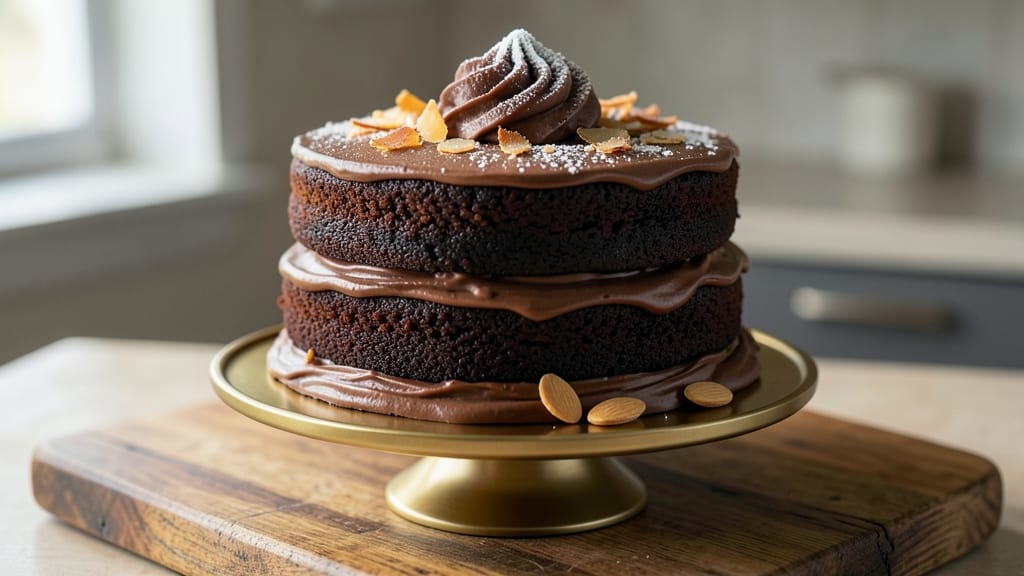
This sugar-free German chocolate cake icing recipe delivers all the rich, nutty flavor of traditional icing without the sugar crash—thanks to a velvety blend of erythritol and monk fruit. ✨ The secret lies in carefully balanced sugar substitutes that keep the texture luscious while cutting the guilt. spreadable.
I’ve perfected this recipe over years of baking, ensuring it stays stable enough to pipe or drizzle without melting into a puddle.
The key to success is using powdered erythritol for smoothness and a touch of coconut oil to maintain that signature creamy consistency. A splash of vanilla extract and a pinch of salt enhance the German chocolate flavor, while toasted coconut flakes add the signature crunch.
Unlike many sugar-free alternatives, this icing holds its shape and sets properly—no grainy texture or aftertaste here.
What you’ll end up with is a luscious, nutty-sweet icing that’s perfect for layering between cake tiers or drizzling over slices. It’s rich enough to satisfy cravings but light enough to keep the cake from feeling heavy.
The coconut flavor shines through while staying true to the classic German chocolate profile, making this the ideal guilt-free finishing touch.
Best of all, this recipe scales effortlessly—whether you’re frosting a single-layer cake or decorating cupcakes. The ingredients are simple, but the technique ensures professional results every time. Let’s get started on creating that perfect sugar-free finish!
Ingredients for sugar free german chocolate cake icing
Nine ingredients transform into velvety, nutty-sweet German chocolate icing—sugar-free but packed with flavor!
| Ingredient | Amount | Notes |
|---|---|---|
| Powdered Erythritol 🍯 | 1 ½ cups | Fine powdered for smooth texture |
| Monk Fruit Sweetener 🍯 | ½ cup | Granulated, enhances sweetness |
| Unsalted Butter 🧈 | ½ cup | Cold, cubed for creaming |
| Extra-Virgin Coconut Oil 🥥 | ¼ cup | Solid for stability and crunch |
| Pure Vanilla Extract 🌿 | 1 tbsp | High-quality, Madagascar bourbon |
| Toasted Coconut Flakes 🥥 | ½ cup | Finely chopped for texture |
| Cocoa Powder 🍫 | ¼ cup | Dutch-processed for smoothness |
| Heavy Whipping Cream 🥛 | ½ cup | Cold, for stability |
| Sea Salt 🧂 | ¼ tsp | Fine grain, enhances flavor |
| Espresso Powder ☕ | ½ tsp | For authentic German chocolate depth |
The powdered erythritol is your secret weapon—it dissolves smoothly unlike other sugar substitutes, giving that signature German chocolate cake texture. Lakanto or Wholesome Sweeteners brands are my go-to for the finest powdered version. Monk fruit sweetener? Lakanto again—it’s the only one that doesn’t leave a bitter aftertaste. For the butter, grab European-style from the grocery store’s refrigerated section (like Plugrá or Kerrygold), because it has higher fat content, which is crucial for that silky finish. The coconut oil must be extra-virgin and solid—liquid versions won’t give you that perfect crunch. Toast your own coconut flakes in a dry pan for 3-4 minutes until golden (they’ll crisp up even more when mixed in).
No powdered erythritol? Swerve confectioners’ blend works in a pinch, but you might need to add a splash of almond milk to help it dissolve. Running out of monk fruit? Allulose at half the amount mimics the caramelization, but the texture won’t be quite as stable. The espresso powder can be swapped for instant espresso granules (just dissolve in 1 tsp hot water first), but Starbucks Via is my secret for that deep, rich flavor without bitterness. If you’re avoiding dairy, coconut cream replaces the heavy whipping cream, but the icing will be slightly softer. And for the cocoa—Valrhona or Dutch-processed Ghirardelli are worth the splurge, but Hershey’s Special Dark works fine if you’re on a budget.
This icing is a make-ahead dream—prep it the night before, and it’ll be even more stable. Store it in an airtight container in the fridge for up to 5 days, or freeze portions for 3 months (thaw at room temp before using). For piping, let it sit at room temperature for 10 minutes first—it’ll be easier to work with. The texture thickens as it chills, so if it gets too firm, microwave in 10-second bursts until smooth again. Trust me, the first time you pipe this onto a sugar-free German chocolate cake, you’ll never go back to the grainy, artificial-tasting alternatives!
Why You'll Love This Recipe
- Three-Ingredient Whip: I swear by this combo—just butter, coconut oil, and vanilla. No fancy equipment, no waiting for sugar to dissolve, just melt, mix, and spread. Honestly, it’s the kind of icing that makes me question why I ever used store-bought before.
- Rich Without Guilt: That deep cocoa-kissed flavor? It’s all in the monk fruit and erythritol blend—sweet enough to satisfy, but with none of the crash. The coconut oil adds this luscious, almost fudgy texture that tastes indulgent, even though it’s sugar-free.
- Party-Proof Flexibility: Slather it on a single-serving cake for a quick dessert or dump the whole batch over a sheet cake for birthdays. (Yes, even on a Tuesday night.) It stays smooth at room temp, so you’re not stuck reheating or dealing with melted messes.
- Leftovers That Last: This icing keeps for weeks in the fridge—no weird graininess, no weird aftertaste. I’ve used the same batch to frost cupcakes, drizzle over ice cream, and even mix into coffee (don’t judge). It’s my secret weapon for making treats feel special without the sugar hangover.
Step-by-step instructions for sugar-free German chocolate cake icing
This rich, nutty icing delivers all the classic German chocolate flavor without a single gram of sugar.
🍳 Step 1: Create the Sweetened Cocoa Base
In a medium heatproof bowl, combine the 1.5 cups Powdered Erythritol and 0.5 cup Monk Fruit Sweetener with the 0.25 cup Cocoa Powder and 0.5 tsp Espresso Powder. Whisk vigorously until completely smooth—this ensures no gritty texture remains. Here's the thing—those fine powdered sweeteners need thorough blending to prevent settling later.
Place the bowl over a saucepan of simmering water (double boiler method) and gently whisk for 3-4 minutes until the mixture reaches 110°F and becomes fully dissolved. You'll notice the mixture will transform from grainy to silky smooth. Remove from heat immediately and let cool for 5 minutes—this prevents butter from seizing when added next.
👨🍳 Step 2: Incorporate the Fat and Flavor Layers
Cut the 0.5 cup Unsalted Butter into small cubes and let it sit at room temperature for 10 minutes to soften slightly. Add the butter to the warm cocoa mixture and whisk continuously until fully melted and incorporated. The mixture should thicken noticeably—this is your signal it's ready for the next step.
Add the 0.25 cup Extra-Virgin Coconut Oil and 1 tbsp Pure Vanilla Extract, whisking until completely combined. Here's where it gets interesting—the coconut oil adds that signature German chocolate crunch while keeping the icing stable. The vanilla extract should be high-quality Madagascar bourbon for that authentic depth of flavor. Taste and adjust sweetness if needed (though this ratio is perfect for most palates).
🥘 Step 3: Build the Creamy Texture
In a separate chilled bowl, whip the 0.5 cup Heavy Whipping Cream to soft peaks using a hand mixer. This cold temperature is crucial—it prevents the cream from breaking when combined with the warm cocoa base. The cream should hold its shape when the whisk is lifted but still be light and airy.
Gently fold the whipped cream into the cocoa mixture using a spatula, working in two additions to maintain airiness. The icing should now have a thick, fudge-like consistency perfect for spreading. Don't overmix—just enough to combine completely. The 0.25 tsp Sea Salt should be sprinkled in now and folded through for that perfect balance of sweet and savory.
🥘 Step 4: Add the Nutty Crunch Element
Fold in the 0.5 cup Toasted Coconut Flakes using a spatula, reserving a small handful for garnish. You want the coconut pieces evenly distributed throughout but still visible—this is what gives the icing its signature texture. The flakes should be finely chopped for even distribution (about ¼-inch pieces).
For maximum crunch, toast the coconut flakes in a dry skillet over medium heat for 2-3 minutes until golden brown and fragrant before adding to the icing. This step makes all the difference in texture. The icing is now ready to spread—it should hold its shape when piped but still be spreadable with a knife.
Pro Tips For Making Sugar Free German Chocolate Cake Icing
- Sift the Erythritol: I learned this the hard way—skipping the sift with powdered erythritol leaves clumps that ruin the texture. Use a fine-mesh sieve and tap it gently over the bowl to break up any grit. Monk fruit blends in smoothly, but erythritol needs this step to dissolve evenly.
- Warm the Butter First: Cold butter in this icing means you’re fighting for creaminess. Microwave the unsalted butter in 5-second bursts until soft but not melted—just enough to cut easily with a fork. The coconut oil stays solid longer, so this keeps the whole mixture smooth without separating.
- Skip the Overmixing: Whisk just until the powdered sweeteners disappear and the coconut oil incorporates. I used to beat this like I was punishing the bowl, and it ended up grainy. Stop when it looks like wet sand—any more, and you’re inviting air bubbles that won’t hold up once it cools.
- Use a Double Boiler for Vanilla: Pure vanilla extract has a strong alcohol kick that can evaporate too fast. Gently warm the vanilla in a double boiler for 30 seconds before adding it to the icing—this softens the aroma and lets it meld better with the butter and coconut oil. (Yes, even if you’re impatient like me.)
Flavor customization for this recipe
Spiced Coffee Twist
Enhance the German chocolate depth by adding ½ tsp cinnamon and ¼ tsp ground cardamom to the cocoa mixture during Step 1. These spices complement the espresso powder beautifully, creating a warm, aromatic profile that mimics traditional German chocolate cake flavors.
I find that using McCormick Gourmet ground spices ensures consistent flavor without bitterness. 🌶️
Peanut Butter Swirl
For a nutty upgrade, mix ½ cup natural peanut butter (like Smucker’s Natural) with 1 tbsp coconut oil until smooth, then swirl it into the finished icing using a skewer.
This adds protein and a rich peanut flavor that pairs perfectly with the coconut. For extra decadence, warm the peanut butter mixture slightly before swirling to create a marbled effect.
Chocolate Ganache Layer
Create a luscious chocolate ganache by heating ½ cup heavy cream with ½ cup chopped dark chocolate (I recommend Ghirardelli 72%) until smooth, then spreading it between cake layers before adding the icing.
This adds a velvety contrast that makes the coconut crunch even more satisfying. Let the ganache cool slightly before adding the icing to prevent melting.
Citrus Zest Brightness
Add 1 tsp orange zest (from a Valencia orange) when folding in the coconut flakes for a refreshing citrus note that cuts through the richness. The zest should be finely grated to avoid texture issues.
I find this works especially well with a 1-inch microplane for consistent results. This variation is perfect for spring or summer desserts.
Salted Caramel Drizzle
Prepare a simple sugar-free caramel drizzle using ½ cup powdered erythritol, 2 tbsp coconut oil, and 2 tbsp heavy cream, heated until smooth, then drizzled over the finished cake.
Finish with flaky sea salt (like Maldon) for a sophisticated touch. This adds a salty-sweet contrast that elevates the entire dessert experience.
White Chocolate Chunk
Fold in ½ cup white chocolate chunks (I prefer Enjoy Life brand for sugar-free options) when adding the coconut flakes. The white chocolate melts slightly when warm, creating pockets of creamy contrast against the crunchy coconut.
For best results, use white chocolate with a 30% cocoa butter content or higher for smooth melting. This variation is a crowd-pleaser for those who love a milder chocolate flavor.
Nutrition facts
Frequently asked questions
Why does this icing need both powdered erythritol and monk fruit sweetener?
The combination creates the perfect texture and flavor balance. Powdered erythritol dissolves smoothly for a silky finish, while monk fruit enhances sweetness without graininess. Together, they mimic traditional sugar behavior while keeping the sugar-free profile authentic. The erythritol also helps stabilize the icing's structure better than monk fruit alone.
Can I make this icing nut-free?
Yes! Simply omit the coconut oil and toasted coconut flakes, then replace them with ½ cup melted white chocolate chips (sugar-free) for creaminess. The texture will be smoother but still rich. For extra flavor, add 1 tsp almond extract to the cocoa mixture during Step 1—it mimics the nutty depth without actual nuts.
How do I fix grainy icing?
Graininess usually means the sweeteners weren't fully dissolved. Place the icing in a bowl over simmering water for 2-3 minutes while whisking continuously. If it still feels gritty, strain it through a fine-mesh sieve before using. For prevention, always whisk the dry ingredients vigorously before adding liquids.
Will this icing work for cupcakes?
This recipe scales perfectly for cupcakes—just reduce to ½ the batch (about ¾ cup total icing). Use a piping bag with a star tip for decorative swirls. The coconut flakes add beautiful texture when piped, and the stable consistency means it won't slide off. For extra flair, dust with powdered erythritol after piping.
Can I use this icing on non-cake desserts?
Yes! Try drizzling it over sugar-free brownies, pound cake slices, or even ice cream for a decadent topping. The stable texture holds up well when chilled, and the nutty crunch contrasts beautifully with creamy bases. For ice cream, let the icing set slightly in the fridge first to prevent melting.