Desserts
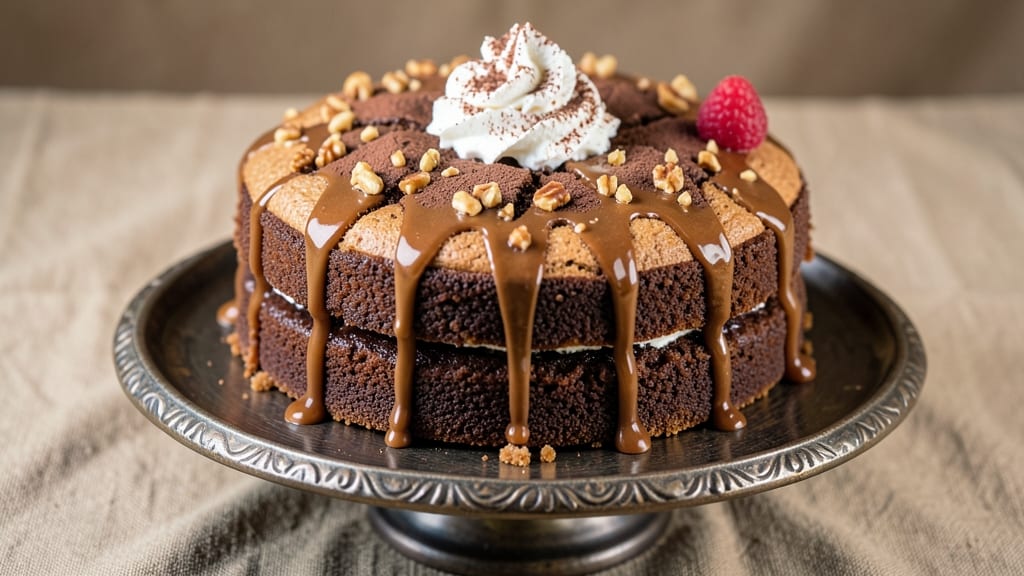
This moist German chocolate cake recipe delivers the perfect balance of fudgy layers and rich chocolate flavor, topped with a toasted pecan crown that adds crunch and visual appeal.
The secret to its legendary moisture lies in using sour cream and buttermilk, which create a tender crumb that stays fresh for days. I've baked this cake countless times for gatherings where it disappears faster than you can say "pecan topping."
What makes this recipe stand out is the chocolate buttercream frosting, which is thick, velvety, and packed with cocoa powder for that signature German chocolate taste. The frosting not only binds the layers beautifully but also adds another layer of moisture to each bite.
Once assembled, the cake gets a crown of toasted pecans and flaked coconut, giving it that classic look and texture contrast that makes every slice irresistible.
The baking process is straightforward, with precise oven temperatures and timing to ensure the cake rises evenly and stays moist. You'll bake two layers at 350°F for about 25-30 minutes, then let them cool before frosting.
The result is a cake that's rich, decadent, and perfectly balanced—never dry or overly sweet. This is the kind of dessert that feels like a hug in cake form.
Whether you're celebrating a birthday, holiday, or just craving a classic treat, this cake delivers restaurant-quality results with a homemade touch. The combination of moist layers, velvety frosting, and crunchy pecan crown makes it a showstopper for any occasion. Let's get baking!
Ingredients for moist german chocolate cake
Twelve simple ingredients transform into the ultimate German chocolate cake experience.
| Ingredient | Amount | Notes |
|---|---|---|
| All-Purpose Flour 🌾 | 3 cups | Sifted for light texture |
| Granulated Sugar 🍚 | 2 ½ cups | White sugar preferred |
| Unsalted Butter 🧈 | 1 ½ cups | Room temperature, full-fat |
| Sour Cream 🥛 | 1 cup | Full-fat for moisture |
| Buttermilk 🥛 | 1 cup | Not low-fat version |
| Large Eggs 🥚 | 4 whole | Room temperature for even mixing |
| Vanilla Extract 🍯 | 2 tsp | Pure extract preferred |
| Baking Powder 🧂 | 1 ½ tsp | Aluminum-free preferred |
| Salt 🧂 | ½ tsp | Fine sea salt |
| Unsweetened Cocoa Powder 🍫 | ¾ cup | Natural cocoa preferred |
| Pecans 🥜 | 2 cups | Chopped, toasted for crown |
| Sweetened Flaked Coconut 🥥 | 1 cup | Toasted for extra flavor |
| Chocolate Buttercream Frosting 🍫 | 3 cups | Homemade or quality store-bought |
The secret to that legendary moisture is all in the sour cream and buttermilk—don't skimp on the full-fat versions. Store-brand butter works just fine, but if you're splurging, grab Land O'Lakes or Plugrá for that perfect melt. For the pecans, Trader Joe's has the best pre-toasted variety (no need to do it yourself), but if you're toasting your own, keep an eye on them—burnt nuts ruin the whole vibe. The cocoa powder? Hershey's Special Dark is my go-to for that classic German chocolate flavor, but Dutch-processed will give you a slightly different (but still delicious) result.
No buttermilk? Mix 1 tbsp lemon juice or vinegar with 1 cup milk and let sit for 5 minutes. Short on sour cream? Greek yogurt works in a pinch—just add a splash of milk to thin it out. The frosting can be homemade (I'll link that recipe later) or store-bought like Betty Crocker's German Chocolate—no judgment here. For the pecan crown, if you can't find sweetened flaked coconut, unsweetened plus 1 tsp sugar gets you close. And if you're feeling fancy, add a sprinkle of sea salt on top of the frosting before adding the pecan crown—trust me, it's worth it.
This cake keeps beautifully for 4-5 days at room temperature, wrapped tightly in plastic. For longer storage, freeze the unfrosted layers for up to 3 months—just thaw overnight before assembling. The frosting? Store in the fridge and bring to room temp before spreading. Pro tip: Bake the layers a day ahead and let them cool completely before frosting—this makes the whole process way easier. And if you're making this for a crowd, double the pecan crown—people will go nuts for it.
Why You'll Love This Recipe
- No Mixer Needed: I swear by this—just a bowl, a whisk, and 10 minutes of stirring. That sour cream and buttermilk combo does all the heavy lifting while I’m still wiping flour off my hands.
- Rich Without Fuss: The butter and sugar melt into something dangerously tender, but here’s the secret: no one will guess it’s just pantry staples. That’s the magic of German chocolate—simple ingredients, next-level results.
- Birthday or Breakfast: Slice it warm for a crowd or pack leftovers for lunch. Honestly, I’ve served it at potlucks, packed it in my kid’s lunchbox, and even eaten it straight from the pan. It handles everything.
- Leftovers That Last: This cake stays moist for days, which means fewer mornings scrambling for dessert. Between us? I’ve had three slices over four days, and it’s still better than store-bought. Budget win.
Step-by-step instructions for moist German chocolate cake
Here's how to bake a cake so moist it stays tender for days—no dry crumb in sight.
Cream Butter and Sugar Until Light and Fluffy
In a stand mixer fitted with the paddle attachment, beat the 1.5 cups unsalted butter and 2.5 cups granulated sugar on medium speed for 3-4 minutes. You're looking for a pale, thick mixture that nearly doubles in volume and leaves faint ribbons when the beaters are lifted. This creaming process incorporates air, which creates that signature tender crumb.
I like to press the butter and sugar mixture between my fingers at this stage—it should hold its shape without being greasy. If it feels too soft, chill the bowl in the fridge for 10 minutes before proceeding. Room temperature butter is key, but if it's too warm, the cake will be dense instead of moist.
Alternate Adding Dry Ingredients with Wet for Even Moisture
With the mixer running on low speed, add 1 cup buttermilk and 1 cup sour cream alternately with 3 cups all-purpose flour, 0.75 cup unsweetened cocoa powder, 1.5 teaspoons baking powder, and 0.5 teaspoon salt. Start and end with flour to prevent a gummy texture. Mix just until combined—you should still see small flour streaks.
Here's the thing—adding the buttermilk and sour cream in this order ensures even moisture distribution throughout the batter. The sour cream adds richness while keeping the cake tender, and the buttermilk prevents cracking. Don't overmix or you'll develop gluten and end up with a tough cake instead of that perfect moist crumb.
Incorporate Eggs and Vanilla for Richness
Add the 4 whole large eggs, one at a time, mixing just until each is fully incorporated. Then add the 2 teaspoons vanilla extract and mix briefly. The eggs bind everything together while adding structure, and the vanilla enhances that classic German chocolate flavor. The batter should be thick but pourable—if it's too stiff, add 1 tablespoon buttermilk to loosen it.
I always tap the bowl gently against the counter a few times after adding the eggs to release any air bubbles. This prevents air pockets in the cake layers. The batter should be smooth with no visible streaks of flour. If you see dry spots, gently fold them in with a spatula to ensure even moisture throughout.
Bake in Two Layers for Perfect Moisture
Divide the batter evenly between two 9-inch round cake pans lined with parchment paper. Bake at 350°F for 25-30 minutes, or until a toothpick inserted in the center comes out with moist crumbs but no wet batter. The edges should be set but the tops should still look slightly soft—this indicates even baking without over-drying.
I know it's tempting to open the oven early, but resist! The cake needs that full baking time to develop proper structure while staying moist. If the tops brown too quickly, tent the pans with foil. Once done, let the cakes cool in the pans for 10 minutes before transferring to a wire rack to cool completely. This gradual cooling prevents cracking and helps maintain moisture.
Assemble with Pecan Crown and Frosting
Level the cooled cake layers if needed, then spread 1.5 cups chocolate buttercream frosting between the layers. Crumble 1 cup toasted sweetened flaked coconut and 1 cup toasted chopped pecans over the top layer, then spread the remaining 1.5 cups frosting over the entire cake. Press the coconut and pecan mixture firmly into the frosting to create that iconic crown.
Chill the assembled cake in the refrigerator for 1 hour before slicing. This resting time allows the frosting to set and the flavors to meld. The result should be layers of moist, fudgy cake with a crunchy pecan-coconut crown on top. Each bite delivers that perfect balance of rich chocolate, buttery texture, and nutty crunch—exactly what makes German chocolate cake special.
Pro Tips For Making Moist German Chocolate Cake
- Cream Butter Slowly: Dump cold butter into warm sugar and let it melt into little pools before mixing—this emulsifies better than cutting it in. I used to pulse it in the food processor and ended up with a dry, crumbly batter every time.
- Measure Sour Cream Right: Use full-fat sour cream (20% or higher) and measure it cold from the fridge—warmed sour cream adds liquid unpredictably. Also, don’t skim the top layer of buttermilk; that’s where the tang lives, and this cake needs it.
- Test Doneness Early: Stick a toothpick in at 30 minutes (not 45!)—if it comes out with moist crumbs but no wet batter, you’re golden. After burning two cakes waiting for the "perfect" time, I learned: German chocolate cake lies about doneness.
- Upgrade with Brown Butter: Swap half the butter for browned butter (cook until nutty, then cool) for a deeper, caramelized flavor. It’s an extra 10 minutes of work, but the cake’s richness jumps from "good" to "showstopper." (Yes, even if you’re impatient like me.)
Dietary considerations for this recipe
Gluten-Free Adaptation
Replace the 3 cups all-purpose flour with a 1:1 gluten-free baking flour blend like Bob's Red Mill or King Arthur. Add 1 teaspoon xanthan gum to improve texture and binding.
The sour cream and buttermilk still work perfectly, but you may need to increase the baking time by 2-3 minutes since gluten-free cakes can dry out faster. 💡
Dairy-Free Options
For a dairy-free version, swap the butter for vegan butter (like Miyoko's or Earth Balance) and use unsweetened almond milk mixed with 1 tablespoon lemon juice to replace the buttermilk.
Substitute the sour cream with full-fat coconut yogurt—just add 1 tablespoon milk to thin it out. The frosting can be made with dairy-free butter and coconut milk powder. 🥥
Lower-Sugar Version
Reduce the granulated sugar to 2 cups and replace ½ cup with unsweetened applesauce or mashed banana for natural sweetness. Use a sugar substitute like erythritol or monk fruit sweetener in the frosting to keep it rich without overpowering the chocolate flavor.
The cake will still be moist but slightly less sweet. 🍫
Nut-Free Alternative
Skip the pecans and replace the crown with toasted coconut flakes and crushed graham crackers for texture. For extra crunch, add chopped dried apricots or toasted pumpkin seeds. The frosting remains the same, ensuring the cake stays rich and flavorful without relying on nuts. 🌰
Egg-Free Substitution
Replace the 4 eggs with 4 tablespoons ground flaxseed mixed with 10 tablespoons water (let sit for 5 minutes to thicken). Alternatively, use 1 cup unsweetened applesauce or ½ cup pumpkin puree to maintain moisture. The cake will still rise but may be slightly denser. 🥚
Keto-Friendly Twist
Use a low-carb flour blend like almond or coconut flour (adjust to 2.5 cups total) and sweeten with ½ cup erythritol or monk fruit sweetener. Replace the frosting with a keto-friendly chocolate buttercream made with cream cheese and powdered erythritol.
The result is a decadent, low-carb version that still delivers on flavor. 💪
Nutrition facts
Frequently asked questions
Why does this cake stay so moist longer than others?
The secret lies in the sour cream and buttermilk—both add moisture while preventing dryness. The 1.5 cups butter creates a rich fat content that locks in moisture, and the 350°F baking temperature ensures even cooking without over-drying. Chilling the cake before slicing also helps preserve its tenderness for 4-5 days at room temperature.
Can I make this cake in a different pan size?
Yes! For an 8-inch pan, bake for 20-25 minutes and use 1.5 cups batter per pan. For a 10-inch pan, increase baking time to 30-35 minutes and use 2.5 cups batter. Always adjust oven racks to the middle position and check doneness with a toothpick—moist crumbs (not wet batter) mean it's done.
What's the best way to store leftovers?
Wrap tightly in plastic wrap and store at room temperature for 2 days, or refrigerate for up to 5 days. For longer storage, freeze unfrosted layers (wrapped individually) for 3 months. Thaw overnight in the fridge before frosting. The frosting should be stored separately in the fridge and brought to room temp before spreading.
My cake cracked on top—what went wrong?
Cracking usually happens from sudden temperature changes. Try these fixes:
- Don't open the oven early—let the cake bake fully.
- Avoid placing hot pans on cold surfaces—let them cool on a wire rack.
- If using a glass pan, reduce baking time by 2-3 minutes since glass conducts heat faster. The cracks won't affect flavor or texture!
Can I make this cake ahead of time?
Bake the layers 1-2 days ahead and store wrapped at room temperature. Frost just before serving. For a 3-day head start, freeze the assembled cake (without the pecan crown) for up to 1 month. Add the crown fresh—it stays crunchy best when toasted last minute.