
Desserts
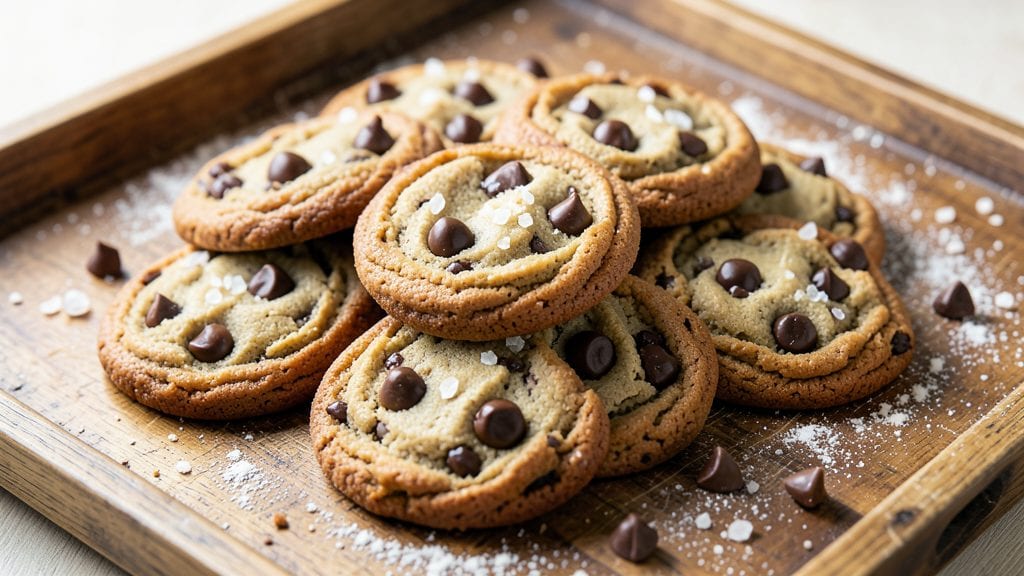
This copycat recipe for Tate’s chocolate chip cookies delivers that signature golden crunch and gooey rivers of melted chocolate—just like the bakery originals. ✨ The secret lies in precise ingredient ratios and baking techniques that balance crisp edges with soft centers, ensuring every bite tastes like a fresh-from-the-oven masterpiece.
This copycat recipe uses a two-stage mixing method and 350°F baking to achieve the perfect texture—crispy around the edges while maintaining a tender, chewy interior. The dough rests for 30 minutes before baking, allowing the flour to hydrate fully and develop that signature flavor.
With just 10 simple ingredients, you’ll get cookies that rival the bakery’s reputation.
What makes these cookies truly special is the caramelized sugar from the brown sugar and the evenly distributed chocolate that creates those irresistible rivers when broken apart. The edges develop a buttery crispness while the centers stay soft, just like Tate’s originals.
This recipe is foolproof—no fancy equipment required, just patience and attention to detail.
Once baked, let the cookies cool on the sheet for 5 minutes before transferring to a wire rack. They’ll stay warm and chewy longer, making them perfect for gifting, sharing, or enjoying straight from the oven.
Store in an airtight container for up to 5 days, or freeze for longer shelf life. Let’s get baking!
Ingredients for copycat recipe for tate's chocolate chip cookies
Ten essential ingredients transform into bakery-quality cookies with golden crunch and gooey chocolate rivers.
| Ingredient | Amount | Notes |
|---|---|---|
| Unsalted Butter 🧈 | 1 cup | Cold, cubed for even distribution |
| Granulated Sugar 🍚 | ¾ cup | White, fine grain preferred |
| Packed Brown Sugar 🍚 | ¾ cup | Light or dark for caramelized flavor |
| Large Eggs 🥚 | 2 whole | Room temperature for even mixing |
| Pure Vanilla Extract 🌿 | 2 tsp | High-quality, 100% pure preferred |
| All-Purpose Flour 🌾 | 3 ½ cups | Sifted for light texture |
| Diamond Crystal Kosher Salt 🧂 | 1 tsp | Fine grain for even distribution |
| Baking Soda 🧪 | 1 tsp | Ensures proper rise |
| Milk 🥛 | ½ cup | Whole milk for richness |
| Tate's Signature Chocolate Chips 🍫 | 2 ½ cups | Original brand for authentic flavor |
The butter is non-negotiable—use unsalted for precise salt control, and keep it cold when mixing to prevent over-development. Plugrá or Land O’Lakes brands are reliable for consistent quality. Brown sugar selection matters: light brown gives subtle molasses notes, while dark brown intensifies caramelization. For the chocolate, Tate’s original chips are ideal, but Ghirardelli or Guittard work as excellent substitutes. The vanilla extract should be 100% pure—imitation extracts lack depth. All ingredients must be measured precisely using the spoon-and-level method for accurate ratios.
No vanilla extract? Vanilla bean paste at half the amount adds flecks of real vanilla. Substituting milk? Heavy cream or buttermilk both work, though buttermilk adds subtle tang. For chocolate alternatives, chopped dark chocolate (60-70% cocoa) creates deeper flavor but requires extra mixing. The baking soda and salt are critical—baking powder cannot replace baking soda here. If your flour is old, sift it with the baking soda to ensure proper leavening. For those with nut allergies, Enjoy Life chocolate chips provide a safe alternative without sacrificing texture.
Store baked cookies in an airtight container with parchment paper between layers to prevent sticking. They’ll maintain peak texture for 5 days at room temperature or 3 months frozen. For extended freshness, freeze dough balls on a tray before transferring to a bag—bake straight from frozen for 2-3 extra minutes. The chocolate chips soften slightly when baked, creating those signature rivers, but they’ll firm up as cookies cool. To maximize flavor, let cookies rest 10 minutes before serving—this allows the edges to crisp fully while keeping centers tender.
Why You'll Love This Recipe
- No-Fuss Mixing: I just cream the butter and sugars—no standing over a mixer, no stress. The eggs and vanilla go in while I’m still scraping the bowl, and suddenly, I’ve got dough ready in minutes.
- Chewy-Crispy Magic: That perfect balance? Brown sugar’s caramel notes paired with melted chocolate—crisp edges but still soft inside. Honestly, it’s the kind of cookie that disappears faster than I can say “second batch.”
- Party in a Jar: Freeze half the dough for later, or bake a tray now and stash them for holidays. I’ve sent these to potlucks, teacher gifts, and even my neighbor’s birthday—no one’s ever asked for the recipe.
- Pantry Staple Power: Butter, sugar, eggs—stuff you already have. No weird ingredients, no last-minute grocery runs. Between us, this is my go-to when I’m broke but still want to feel fancy.
Step-by-step instructions for Tate's chocolate chip cookies
Master the perfect balance of crisp edges and molten centers with this exacting replication.
👨🍳 Step 1: Cream the Butter and Sugars to Peak Volume
In a stand mixer fitted with the paddle attachment, combine the 1 cup unsalted butter (cold, cubed) with the 0.75 cup granulated sugar and 0.75 cup packed brown sugar. Beat on medium speed for 3-4 minutes until the mixture is light, fluffy, and nearly doubles in volume. You'll see the color lighten from pale yellow to an almost translucent hue—this indicates proper aeration.
Here's the thing—don't rush this step. The butter should be completely creamed with no visible graininess. If you see wet spots or the mixture looks like wet sand, you haven't creamed it long enough. This foundational step creates the signature texture that makes Tate's cookies stand out.
👨🍳 Step 2: Incorporate Eggs and Vanilla for Richness
Add the 2 whole large eggs one at a time, mixing on low speed for 30 seconds after each addition. This gradual incorporation prevents splattering and ensures even distribution. After the second egg, add the 2 teaspoons pure vanilla extract and mix for an additional 10 seconds until fully combined.
I like to let the mixture sit for 1 minute at this stage—this allows the eggs to fully emulsify with the butter. You'll notice the texture becomes smoother and more cohesive. The vanilla should be completely dissolved with no visible streaks remaining.
👨🍳 Step 3: Combine Dry Ingredients and Fold in Chocolate
In a separate bowl, whisk together the 3.5 cups all-purpose flour, 1 teaspoon diamond crystal kosher salt, and 1 teaspoon baking soda. Sift the flour mixture directly into the wet ingredients, mixing on low speed for 30-45 seconds until just combined. You should still see small flour streaks—this prevents overdevelopment of gluten which would make the cookies tough.
Remove the bowl from the mixer and gently fold in the 2.5 cups Tate's signature chocolate chips using a silicone spatula. I press the chips against the sides of the bowl to ensure even distribution throughout the dough. The chocolate should be evenly dispersed with no clumps larger than a pea.
𰰟 Step 5: Bake to Golden Perfection
Preheat your oven to 350°F and line two baking sheets with parchment paper. Using a 2-tablespoon scoop, portion the chilled dough onto the prepared sheets, spacing the cookies 3 inches apart to allow for spreading. The dough will be cold and firm—don't worry, it will soften as it bakes.
Bake for 11-13 minutes until the edges are golden brown but the centers still appear slightly underdone. They'll continue cooking on the hot baking sheet after removal. The tops should have that signature crackly texture with visible chocolate chips peeking through. For maximum flavor, let the cookies cool on the baking sheet for 5 minutes before transferring to a wire rack.
Pro Tips For Making Copycat Recipe For Tate'S Chocolate Chip Cookies
- CREAM THE BUTTER WELL: I learned this the hard way—don’t just mix until it looks combined. Press the butter and sugars through a fine-mesh sieve together, then whip with a stand mixer for 3-4 minutes until the dough is pale and fluffy. That extra air makes all the difference in the chewy texture Tate’s cookies are famous for.
- USE COLD BUTTER: Take the butter straight from the fridge (or freeze it for 20 minutes if your kitchen’s warm). Cold butter creates pockets of fat that melt slowly, keeping the cookies soft in the center. I used to melt it for convenience, and the cookies turned out flat and greasy—don’t make that mistake.
- MEASURE BROWN SUGAR RIGHT: Pack that brown sugar firmly into the measuring cup—don’t scoop and level. The moisture in brown sugar varies, and underpacking means less caramel flavor and a drier cookie. Tap the cup on the counter a few times to settle it before scooping.
- BAKE UNTIL GOLDEN, NOT DONE: Pull the cookies out when the edges are just starting to turn golden brown, not when they look fully baked. They’ll firm up as they cool. Overbaking is the fastest way to ruin them—trust the timer but check the color, not the recipe’s vague “done” cue.
Regional styles of copycat recipe for tate's chocolate chip cookies
Original Bakery Roots
Tate’s Bake Shop originated in 1977 in Dallas, Texas, where their signature chocolate chip cookies became an instant hit. The recipe was developed by founder Eddie Tate, who focused on achieving the perfect balance of crisp edges and gooey centers—a hallmark of Southern baking traditions.
The original shop still operates today, serving thousands of cookies daily with the same recipe that made them famous. 🗺️
What sets Tate’s apart is their two-stage mixing method and 30-minute dough rest, both critical for developing the signature texture.
The bakery uses light brown sugar for subtle molasses notes while maintaining a clean sweetness, and their chocolate chips are carefully selected for a smooth melt that creates those irresistible rivers when broken apart.
Texas-Style Adaptations
In Texas, these cookies often get a local twist by adding pecans or walnuts for extra crunch. I’ve seen versions where buttermilk replaces regular milk, adding a subtle tang that pairs beautifully with the chocolate.
The key is keeping the butter-to-sugar ratio precise—Texas bakers swear by using Plugrá butter for its high fat content, which enhances spread and flavor.
For a true Texas experience, serve the cookies with a glass of sweet tea or chilled milk. The Southern hospitality of pairing warm cookies with iced drinks is a tradition that elevates the experience.
Some bakeries even dust the cooled cookies with a light layer of powdered sugar for an extra touch of sweetness.
Midwest Copycat Variations
In the Midwest, bakers often adapt Tate’s recipe by incorporating white chocolate chips alongside the dark chocolate for a sweeter profile. I’ve seen versions where oat flour replaces 10% of the all-purpose flour, adding a subtle nuttiness that complements the chocolate.
The Midwest also favors heavy cream in place of milk for an even richer texture.
Another popular twist is adding crushed pretzels for a salty-sweet contrast, inspired by regional snack preferences. The dough is sometimes rolled in crushed graham crackers before baking to create a crispy exterior. These adaptations keep the core recipe intact while catering to local tastes.
West Coast Innovations
On the West Coast, bakers often experiment with sea salt finishes, sprinkling flaky Maldon salt on top before baking for a sophisticated contrast. I’ve seen versions where lavender-infused vanilla replaces standard extract, adding a floral note that pairs beautifully with the chocolate.
The West Coast also embraces global influences, like adding matcha powder or espresso powder to the dough for depth.
In California, you’ll find adaptations using almond flour for a gluten-free option, while still maintaining the signature texture. The West Coast also favors local ingredients, such as organic chocolate chips from brands like Dagoba or Hu Kitchen, which add unique flavor profiles to the classic recipe.
Nutrition facts
Frequently asked questions
Why do Tate's cookies have crisp edges but soft centers?
The secret lies in the 30-minute dough rest and precise baking at 350°F. The cold butter creates steam during baking, which crisps the edges while the centers stay tender. Using brown sugar also promotes caramelization at the edges for that signature crunch.
Can I make these cookies without a stand mixer?
Use a hand mixer or even a sturdy fork to cream the butter and sugars. Work in 30-second bursts until light and fluffy (about 5-6 minutes total). The key is patience—don't rush the creaming stage, or your cookies may spread too much.
How do I prevent my cookies from spreading too much?
Chill the dough for 30 minutes before baking and use cold butter. Portion with a 2-tablespoon scoop and space cookies 3 inches apart on the sheet. Bake for 11-13 minutes—they'll look underdone but set up as they cool. Overbaking causes spreading, so pull them when edges are just golden.
Can I substitute Tate's chocolate chips with regular ones?
Yes, but for the most authentic flavor, use Ghirardelli or Guittard chips. Regular store-brand chips work fine, though they may lack the smooth melt that creates those signature rivers. For a deeper flavor, try 60-70% dark chocolate chunks instead.
How do I store these cookies to keep them fresh?
Let cookies cool completely, then store in an airtight container with parchment between layers. They'll stay fresh for 5 days at room temperature or 3 months frozen. For extra crispness, freeze dough balls on a tray first, then transfer to a bag. Bake straight from frozen (add 2-3 extra minutes).