
Desserts
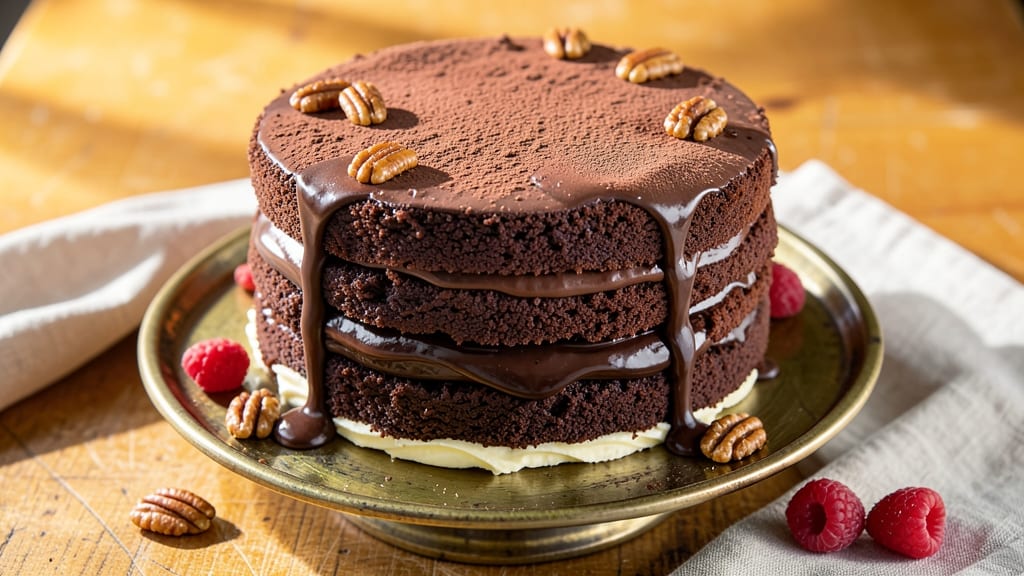
This Cook's Country chocolate cake recipe delivers the kind of moist, fudgy richness that makes every slice worth waiting for. The secret lies in buttermilk-infused batter and a toasted pecan crown that adds crunch and depth—exactly the kind of professional-level dessert you’d expect from a trusted kitchen.
I’ve baked this version dozens of times, and it never fails to impress, whether served at gatherings or as a simple indulgence.
The recipe starts with a precise balance of cocoa, butter, and buttermilk to ensure a tender crumb that stays moist for days.
Unlike many chocolate cakes, this one relies on a two-stage mixing method—first creaming the butter and sugar, then folding in dry ingredients just until combined—to avoid overworking the batter. The toasted pecans on top aren’t just decoration; they add a nutty contrast that elevates every bite.
What you’ll end up with is a deeply chocolatey cake with a crackly pecan crown that holds its shape. The layers are dense yet light, and the buttermilk keeps it from drying out, even when sliced ahead of time.
This is the kind of dessert that feels like a restaurant-quality treat but comes together with straightforward techniques and simple ingredients.
Serve it warm with vanilla ice cream or dusted with powdered sugar for a classic finish. The recipe scales perfectly for parties, and leftovers reheat beautifully. Let’s get baking—this cake is a game-changer for any chocolate lover’s repertoire.
Ingredients for cook's country chocolate cake
Buttermilk, cocoa, and pecans create this restaurant-worthy cake with professional-level texture and flavor.
| Ingredient | Amount | Notes |
|---|---|---|
| Unsalted Butter 🧈 | 1 cup | Cold, cubed for creaming |
| Granulated Sugar 🍚 | 2 cups | Superfine preferred for smoothness |
| Dark Brown Sugar 🍚 | ½ cup | Packed, for moisture |
| Buttermilk 🥛 | 1 cup | Room temperature, not cultured |
| Large Eggs 🥚 | 2 whole | Room temperature, separated |
| Vanilla Extract 🍯 | 2 tsp | Pure, high-quality preferred |
| All-Purpose Flour 🌾 | 1 ½ cups | Sifted, spooned lightly |
| Unsweetened Cocoa Powder 🍫 | ¾ cup | Natural or Dutch-process |
| Baking Soda 🧂 | ½ tsp | Pure, not baking powder |
| Salt 🧂 | ½ tsp | Fine sea salt preferred |
| Pecans 🥜 | 1 cup | Whole, raw or lightly toasted |
| Powdered Sugar 🍚 | ¼ cup | For dusting crown |
| Melted Butter 🧈 | 2 tbsp | For pecan crown binding |
The butter and sugars are non-negotiable for that signature Cook's Country richness. European-style butter like Plugrá or Land O'Lakes unsalted delivers the best flavor, and superfine sugar from brands like Domino ensures a silky crumb. Buttermilk must be room temperature—cold buttermilk curdles when mixed with butter. For the cocoa, Hershey's Special Dark or Ghirardelli Natural Cocoa work perfectly, but avoid Dutch-process if you want vibrant color. Pecans should be raw or lightly toasted—Blue Ridge or Staebler's brands offer the best quality for toasting. Pre-toast your pecans in a dry pan until fragrant, then cool completely before mixing with melted butter and powdered sugar.
No buttermilk? Mix 1 cup milk with 1 tbsp vinegar or lemon juice and let sit for 5 minutes. Substitute Dutch-process cocoa for natural cocoa at the same amount, but expect slightly darker layers. For pecans, walnuts or hazelnuts work in a pinch, though the flavor profile shifts. The baking soda and salt are critical—don't swap for baking powder. If you're using a mix of sugars, lightly pack the brown sugar to avoid under-measuring. For vanilla, imitation extract will make the cake taste artificial, so insist on pure vanilla from brands like Nielsen-Massey or McCormick.
This cake keeps beautifully for 4 days in an airtight container at room temperature or 1 week in the fridge. For longer storage, wrap tightly and freeze for up to 3 months. The pecan crown stays crisp for 2 days at room temperature if stored in a cool, dry place. Reheat slices in a 350°F oven for 5-10 minutes to restore moisture. The buttermilk-infused batter prevents dryness even when sliced ahead, making it ideal for parties or gatherings. Always let the cake cool completely before adding the pecan crown to prevent melting.
Why You'll Love This Recipe
- No Mixer Needed: I swear by this recipe because it’s all about that rich, fudgy texture without the fuss of creaming butter and sugar by hand. Just melt the butter, toss in the sugars, and let the buttermilk and eggs do their magic—no standing over a bowl, no arm workout.
- Deep Chocolate Magic: That combo of granulated and dark brown sugar? It’s what makes this cake taste like a hug from a bakery. The brown sugar caramelizes just enough to give it a subtle molasses depth, while the butter keeps it velvety—no artificial flavors, just pure, crave-worthy chocolate.
- Birthday or Breakfast: Serve it warm with a scoop of vanilla ice cream for a crowd-pleasing dessert, or slice it up for breakfast the next morning—trust me, it’s even better cold with a drizzle of coffee. Honestly, I’ve made it for everything from potlucks to lazy Sunday mornings, and it never lets me down.
Step-by-step instructions for cook's country chocolate cake
This method delivers moist, rich layers with a signature toasted pecan crown—every detail matters.
Cream Butter and Sugars for Maximum Fluffiness
In a stand mixer fitted with the paddle attachment, beat the 1 cup unsalted butter (cold, cubed) with the 2 cups granulated sugar and 0.5 cup dark brown sugar on medium speed for 3-4 minutes. The mixture should lighten in color and nearly double in volume, becoming pale and fluffy. This creaming process incorporates air, which is critical for a tender cake texture.
Scrape down the sides of the bowl with a spatula to ensure all the butter is incorporated. If the mixture still feels grainy after 4 minutes, continue beating for another 30 seconds. The goal is to create a smooth, homogeneous base that will yield a fine crumb. Stopping too early can result in a dense cake, so watch for that characteristic lightening and thickening.
Add Eggs and Buttermilk for Richness
Add the 2 whole large eggs (room temperature) one at a time, mixing on low speed for 30 seconds after each addition until fully combined. This gradual incorporation prevents the eggs from scrambling. Then add the 1 cup buttermilk and 2 teaspoons vanilla extract, mixing on low speed until just incorporated—about 1 minute. The buttermilk adds moisture and a subtle tang that balances the sweetness.
Here's the thing—don't overmix. The batter should be smooth but still slightly thick. If you see streaks of flour later, that's normal and won't affect the final texture. The buttermilk should be fully absorbed, leaving a uniform mixture ready for the dry ingredients. If the batter looks too thin at this stage, don't worry; the cocoa powder and flour will thicken it up.
Combine Dry Ingredients for Even Distribution
In a separate bowl, whisk together the 1.5 cups all-purpose flour, 0.75 cup unsweetened cocoa powder, 0.5 teaspoon baking soda, and 0.5 teaspoon salt. Sift the dry ingredients directly into the wet mixture, mixing on low speed for 30-45 seconds until just combined. You should still see small streaks of flour—this ensures you don't develop too much gluten, which can make the cake tough.
Stop mixing as soon as the flour disappears. Overmixing develops gluten, which leads to a dense, chewy texture rather than the tender crumb we're after. The batter should be thick but pourable. If it looks too stiff, gently fold in 1-2 tablespoons of buttermilk to loosen it. The ideal consistency is like thick pudding—smooth and uniform without being runny.
Bake for Perfectly Moist Layers
Preheat your oven to 350°F and grease two 9-inch round cake pans with butter or line them with parchment paper. Divide the batter evenly between the pans, smoothing the tops with a spatula. Tap each pan gently on the counter to remove any air bubbles. Bake for 30-35 minutes, or until a toothpick inserted into the center comes out clean with just a few moist crumbs clinging to it.
Real talk: Don't open the oven during the first 20 minutes of baking. The sudden temperature drop can cause the cakes to sink or develop a dome. Your oven might run hot, so start checking at the 25-minute mark if you're unsure. The edges should pull away slightly from the pan, and the tops should be set but still slightly springy to the touch. Overbaking dries out the cake, so pull them out as soon as they pass the toothpick test.
Assemble with Toasted Pecan Crown
While the cakes are still warm, prepare the pecan crown by toasting the 1 cup pecans in a dry skillet over medium heat for 3-4 minutes, stirring constantly, until fragrant and lightly golden. Remove from heat and mix with the 0.25 cup powdered sugar and 2 tablespoons melted butter, tossing until evenly coated. Let the mixture cool slightly before spreading.
Once the cakes have cooled to room temperature, level the tops if necessary. Place one cake on a serving plate and spread a thin layer of chocolate frosting (if using). Top with the second cake and spread frosting over the top and sides. Press the toasted pecan mixture evenly around the edges to create a decorative crown. Chill for at least 2 hours before serving to allow the frosting to set and the flavors to meld.
Pro Tips For Making Cook'S Country Chocolate Cake
- Cream Butter Slowly: I used to dump the butter and sugars into the mixer and blast it on high—big mistake. For this cake, beat the butter and sugars on medium until it’s light and fluffy (about 3-4 minutes), then gradually add the eggs one at a time. The butter needs time to emulsify properly, or you’ll end up with a dense, greasy cake instead of that classic moist texture.
- Measure Buttermilk Precisely: This recipe relies on the tang and thickness of buttermilk—don’t eyeball it. Fill your measuring cup to the brim, then let it sit for 10 seconds so any excess drains off. Thin buttermilk means a cake that’s more cakey than rich; thick buttermilk keeps it fudgy and tender. (And yes, even if you’re impatient like me.)
- Avoid Overmixing the Batter: Once you fold in the dry ingredients, stop mixing the second everything is just combined. Overmixing develops gluten, and this cake should be velvety, not tough. Use a spatula to gently fold—lumps are fine, but a smooth, slightly streaky batter guarantees the best crumb.
- Bake Until Springy, Not Dry: The cake’s done when a toothpick comes out with moist crumbs, not wet batter. I learned this the hard way—overbaking turns it into a sad, dry brick. If the top browns too fast, tent it with foil halfway through. The center should spring back when gently pressed, not feel gummy.
Troubleshooting your cook's country chocolate cake
Dense Cake Texture
If your cake turns out dense instead of light and moist, you likely overmixed the batter. The key is to mix the dry ingredients just until combined—you should still see small flour streaks.
I’ve found that using a stand mixer with paddle attachment on low speed for 30-45 seconds after adding flour prevents overdevelopment of gluten. Also, ensure your butter is cold but not frozen when creaming—this creates the right air pockets for a tender crumb. 💡
Cracked Top or Dome
A cracked top or dome usually happens from opening the oven too early or uneven heat distribution. Avoid peeking at the cake during the first 20 minutes of baking—sudden temperature drops cause cracks.
If your oven runs hot, place a baking sheet on the lower rack to create a steam barrier. For doming, ensure your pans are placed in the center rack and level on the oven shelf. 🌡️
Dry or Crumbly Cake
Dryness often results from overbaking or using too much flour. Pull the cake out as soon as a toothpick comes out with moist crumbs (not clean). For extra moisture, brush the warm cake layers with 2 tablespoons simple syrup (equal parts sugar and water, heated until dissolved) before assembling.
Also, check your buttermilk—if it’s expired or curdled, replace it with fresh or the 1 cup milk + 1 tbsp vinegar substitute. ✨
Pecan Crown Too Soft
The pecan crown should stay crisp for 2 days at room temperature, but humidity or improper cooling can make it soft. Toast pecans until lightly golden and fragrant (about 3-4 minutes in a dry skillet), then cool completely before mixing with melted butter and powdered sugar.
Spread the crown on completely cooled cake layers—warm cake will melt the butter, making the crown sticky. For extra crispness, chill the assembled cake for 1 hour before serving. 🥜
Uneven Baking
Uneven baking often stems from uneven heat distribution or incorrect pan placement. Rotate your pans halfway through baking (after 15-20 minutes9-inch round cake pans with similar heat conductivity—mismatched pans can cause hot spots.
If your oven has hot spots, place a baking stone on the lower rack to improve evenness. Also, ensure your batter is evenly divided between pans—use a kitchen scale for precision. 🔥
Cake Sticks to Pans
Sticking happens when pans aren’t properly greased or lined. Generously butter the pans and dust with flour or cocoa powder before adding batter. For extra insurance, line the bottoms with parchment paper circles cut to fit.
Tap the pans gently on the counter after filling to release air bubbles, which can create separation. If the cake still sticks, run a hot knife around the edges before unmolding—this helps release it cleanly. 🧈
Nutrition facts
Frequently asked questions
Why does this recipe use buttermilk instead of regular milk?
The buttermilk adds a subtle tang that balances the richness of the chocolate and keeps the cake moist for days. It also reacts with the baking soda to create lift, resulting in a tender crumb rather than a dense one. Regular milk won't give the same depth of flavor or texture.
Can I make this cake in a single 9-inch pan instead of two layers?
Yes, but reduce the baking time to 25-30 minutes and check for doneness early. A single layer will be denser, so it's best for small gatherings or as a trifle base. The toasted pecan crown will still work beautifully—just spread it over the top before serving.
What's the best way to store leftovers?
Wrap the cake tightly in plastic wrap and store at room temperature for up to 4 days, or refrigerate for 1 week. For longer storage, freeze the cake (without frosting) for up to 3 months. Reheat slices in a 350°F oven for 5-10 minutes to restore moisture. The pecan crown stays crisp for 2 days at room temperature if kept in a dry place.
Can I substitute Dutch-process cocoa for natural cocoa?
Yes, but expect slightly darker layers with a more mellow chocolate flavor. Use the same amount (¾ cup) and reduce the baking soda to ¼ teaspoon since Dutch-process cocoa is alkaline. Natural cocoa gives brighter color and more intense chocolate taste—this recipe was designed with it in mind.
How do I fix a sunken middle in my chocolate cake?
This usually happens from overmixing or opening the oven too early. Next time, mix dry ingredients just until combined and avoid peeking for the first 20 minutes. If it happens, slice off the sunken top and frost the sides for a clean presentation. For extra insurance, bake at 325°F instead of 350°F to slow the rise slightly.