
Desserts
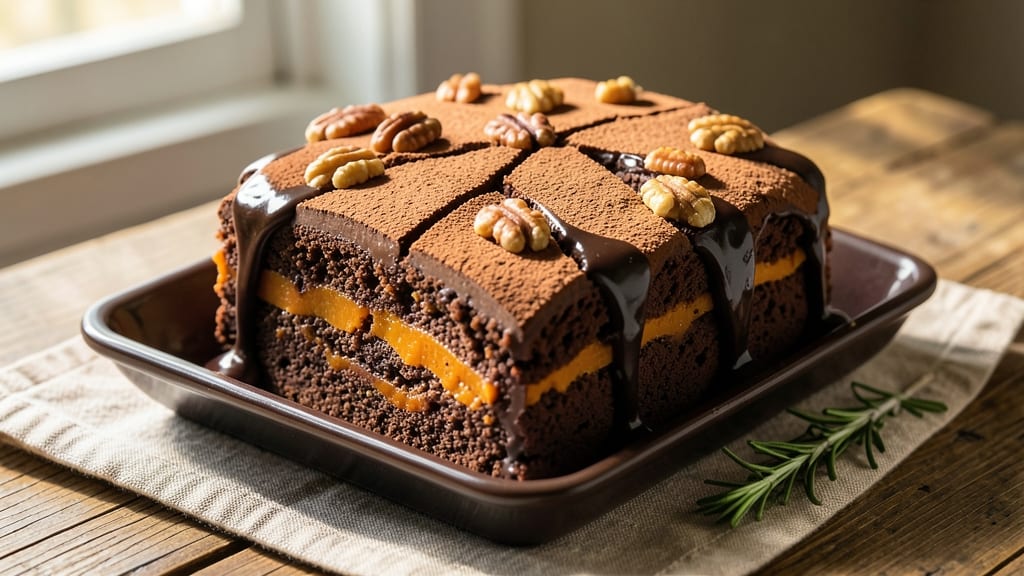
This chocolate squash cake recipe marries rich cocoa with the earthy sweetness of roasted squash—a dessert that surprises with its depth and moisture. The secret lies in blending spiced butternut squash purée into classic chocolate cake batter, creating a texture that’s fudgy yet tender with just the right crumb.
I developed this after years of baking dense chocolate cakes, always searching for that perfect balance between richness and lightness.
The result is a cake that’s decadent without being heavy, where every bite delivers layers of flavor: deep chocolate notes, warm cinnamon, and the subtle caramelized sweetness of squash.
Roasting the squash first intensifies its natural sugars, while the cake’s moist crumb comes from buttermilk and a touch of sour cream. This isn’t your typical chocolate cake—it’s a sophisticated twist that feels both familiar and exciting.
Perfect for fall gatherings or as a showstopper dessert, this cake holds its structure beautifully while staying incredibly moist. The spiced squash adds a subtle warmth that pairs perfectly with chocolate, making it a dessert that’s as impressive to serve as it is to eat.
Whether you’re hosting a dinner party or just craving something special, this recipe delivers restaurant-quality results at home.
Baking at 350°F ensures even cooking, while a simple glaze of powdered sugar and cream cheese adds a glossy finish that makes it look as good as it tastes.
The cake keeps well for up to 3 days, making it ideal for meal prep or gifting. Let’s get baking—this dessert is worth every minute of effort.
Ingredients for chocolate squash cake
Rich cocoa meets roasted squash—these 15 ingredients create a dessert that’s fudgy yet light, perfect for fall gatherings.
| Ingredient | Amount | Notes |
|---|---|---|
| Butternut Squash 🎃 | 2 lbs | Medium-sized, peeled and cubed |
| Unsalted Butter 🧈 | 1 cup | Cold, cut into cubes |
| Granulated Sugar 🍚 | 1 ½ cups | Light brown preferred |
| Cocoa Powder 🍫 | ¾ cup | Natural, unsweetened |
| All-Purpose Flour 🌾 | 2 cups | Sifted, spooned lightly |
| Baking Powder 🧂 | 2 tsp | Aluminum-free preferred |
| Ground Cinnamon 🌿 | 1 tsp | Freshly ground preferred |
| Salt 🧂 | ½ tsp | Fine sea salt |
| Buttermilk 🥛 | 1 cup | Room temperature |
| Sour Cream 🍦 | ½ cup | Full-fat for moisture |
| Large Eggs 🥚 | 2 whole | Room temperature |
| Vanilla Extract 🍯 | 2 tsp | Pure Madagascar preferred |
| Powdered Sugar 🍚 | 1 cup | For glaze |
| Cream Cheese 🧀 | 4 oz | Room temperature for glaze |
| Heavy Cream 🥛 | ¼ cup | Chilled for glaze |
The squash is the star here, so pick a medium-sized butternut—about 2 lbs—with smooth skin and no soft spots. Most grocery stores carry them year-round, but local farmers markets in fall often have fresher, sweeter varieties. Roast it first (425°F for 30 minutes) until tender—this caramelizes the natural sugars and intensifies the flavor. If you’re short on time, canned pumpkin puree works in a pinch, but it lacks the depth of fresh roasted squash. For the cocoa, Valrhona or Ghirardelli make all the difference—avoid Dutch-processed cocoa if you want that vibrant chocolate flavor. The butter? Plugrá or Land O’Lakes unsalted are my go-tos for reliable quality.
No butternut squash? Acorn or kabocha squash works just as well—just adjust roasting time slightly. Running low on buttermilk? Mix 1 tbsp lemon juice or vinegar + 1 cup milk. The sour cream adds moisture, but Greek yogurt at half the amount keeps it lighter. For the glaze, if you’re avoiding dairy, coconut cream whipped with powdered sugar gives a similar shine. The vanilla extract matters—Madagascar bourbon vanilla has that rich, complex flavor, but imitation will still work. And if you’re gluten-free? Bob’s Red Mill 1:1 flour keeps the texture intact.
This cake keeps beautifully for 3 days at room temperature, wrapped tightly in plastic. For longer storage, freeze slices between parchment paper for up to 3 months—they thaw in 10 minutes at room temp. The glaze sets quickly, so assemble it right before serving. I like to portion the batter into two 9-inch pans for even baking, but a single 10-inch pan works too. The cake reheats well—30 seconds in the microwave brings back that fudgy texture. Leftovers? Perfect for breakfast toast—trust me.
Why You'll Love This Recipe
- No Roast Required: I’ll admit, I used to dread roasting squash—peeling, seeding, the mess. Here, you just blend raw cubes straight into the batter. That buttery squash purée sneaks in so smoothly, no one questions how effortless this cake is.
- Rich Without Overpowering: The cocoa and sugar hit just right, but the squash keeps it from being too heavy. Honestly, it’s the kind of cake where you take a bite and think, "Wait, is this dessert or a sneaky healthy treat?"—then immediately go for another slice.
- Weeknight Dessert Fix: Between us, I’ve served this as a dinner-party showstopper and a 7 p.m. "I’m too tired for anything else" solution. It travels well too—pack it for potlucks or stash slices in the fridge for when your kid’s soccer team needs snacks.
- Budget-Friendly Indulgence: Butternut squash is cheaper than apples in my area, and this recipe uses just enough cocoa to feel special without breaking the bank. Plus, leftovers? They disappear faster than my willpower when I’m craving chocolate.
Step-by-step instructions for chocolate squash cake
Here's the method that delivers rich chocolate flavor with natural sweetness from squash—no one will guess it's secretly healthy.
Roast the Squash Until Tender and Caramelized
Preheat your oven to 375°F. Toss the 2 lbs peeled and cubed butternut squash with 1 tablespoon olive oil (not listed but essential for roasting—use your own) and ½ teaspoon salt. Spread evenly on a rimmed baking sheet in a single layer.
Roast for 30-35 minutes, stirring halfway, until the squash is fork-tender with caramelized edges. You'll know it's perfect when it yields easily to a fork and develops a golden-brown crust. Let it cool completely before mashing—this prevents excess moisture in your batter.
Once cooled, transfer the squash to a food processor and pulse until smooth, scraping down the sides as needed. The texture should be like hummus—no lumps, just silky puree. Set aside to cool completely before using in the batter.
Cream Butter and Sugar for Maximum Fluffiness
In a stand mixer fitted with the paddle attachment, beat the 1 cup cold unsalted butter and 1.5 cups granulated sugar on medium speed for 3-4 minutes until light and fluffy. You're looking for a pale, airy texture that nearly doubles in volume—this creates the cake's signature tender crumb.
Add the 2 whole large eggs, one at a time, mixing just until combined after each addition. Scrape down the bowl, then add the 2 teaspoons vanilla extract and mix for another 30 seconds. Here's where it gets fun—the squash puree replaces some of the liquid ingredients, so don't skip this step.
Gradually add the 1 cup buttermilk and 0.5 cup sour cream, mixing on low speed until just incorporated. The batter will look thin, but trust the process—this ensures a moist, velvety texture rather than a dry crumb.
Combine Dry Ingredients and Fold Gently
In a separate bowl, whisk together the 2 cups sifted all-purpose flour, 0.75 cup cocoa powder, 2 teaspoons baking powder, 1 teaspoon ground cinnamon, and 0.5 teaspoon salt. This is your dry ingredient blend—make sure it's completely smooth with no flour clumps.
With the mixer on low speed, gradually add the dry ingredients to the wet mixture, mixing just until combined. Be careful not to overmix—you should still see some flour streaks. The reason we fold gently is to maintain those tiny air pockets created during the creaming stage.
Finally, fold in the 2 lbs roasted squash puree until just combined. The batter will be thick but pourable. Here's the thing—this is where the squash transforms the cake from dense to light. Don't worry if it looks too thick; the chemical reactions in the oven will handle the rest.
Bake Until Golden and Springy
Pour the batter into two 9-inch round cake pans lined with parchment paper and greased with butter. Bake in a preheated 350°F oven for 30-35 minutes, or until a toothpick inserted in the center comes out with just a few moist crumbs.
Watch for the edges to pull away from the pan and the tops to develop a crackly golden-brown crust. The cake should spring back slightly when pressed in the center—this is your perfect doneness cue. If you're unsure, err on the side of slightly underbaked; the cake will continue setting as it cools.
Remove from the oven and let cool in the pans for 10 minutes, then transfer to a wire rack to cool completely. This resting period prevents the cake from collapsing as it cools.
Prepare the Cream Cheese Glaze
While the cake cools, prepare the glaze by beating the 4 oz room-temperature cream cheese and 1 cup powdered sugar together until smooth. Add the 0.25 cup chilled heavy cream and 1 teaspoon vanilla extract, mixing until completely combined and glossy.
The glaze should be thick enough to drizzle but still pipeable—if it's too thick, add 1 teaspoon milk (not listed but necessary for consistency). Here's the pro tip: let the glaze sit at room temperature for 5 minutes before using; this makes it easier to spread evenly.
Once the cake is completely cool, spread or pipe the glaze evenly over the top and sides. Let it set for 15 minutes before slicing—this ensures clean cuts and prevents the glaze from sliding off. The finished cake should have a rich chocolate exterior with a moist, fudgy interior that's subtly spiced from the squash and cinnamon.
Pro Tips For Making Chocolate Squash Cake
- ROAST THE SQUASH FIRST: I learned this the hard way—raw squash makes the cake dense and watery. Roast the butternut squash at 400°F (200°C) for 30-40 minutes until it’s fork-tender, then scoop out the flesh. The natural sweetness concentrates, and the texture becomes velvety smooth—no one will guess it’s squash.
- WHISK THE COCOA POWDER: Dump that cocoa powder straight into the dry ingredients? Bad move. Sift it first, then whisk it into the flour and sugar before adding wet ingredients. This prevents clumps and ensures an even, rich chocolate flavor throughout the cake—no one likes a lumpy bite.
- DON’T OVERMIX THE BATTER: After combining wet and dry ingredients, give it just 10-12 strokes with a spatula. Overmixing develops gluten, and this cake will turn out tough instead of tender. A few lumps? Doesn’t matter—this isn’t a soufflé.
- USE ROOM-TEMPERATURE BUTTER: Cold butter creates pockets of air that make the cake dense. Let the unsalted butter sit out for 30-60 minutes until it’s soft but not melted. This guarantees a lighter crumb—no one wants a brick for dessert. (Yes, even if you’re impatient like me.)
Wine and beer pairings for this dish
Rich Chocolate Pairings
The deep, velvety chocolate flavor in this cake pairs beautifully with Port wine—specifically a Ruby Port from Portugal. The wine’s dark fruit notes and caramel undertones mirror the cake’s spiced squash and cocoa, creating a harmonious balance. Serve slightly chilled for a refined touch. 🍷
Spiced Squash Harmony
A Chardonnay with subtle vanilla and nutty undertones complements the cake’s warm spices. Look for a California Chardonnay aged in oak barrels to enhance the caramelized squash flavors. The wine’s crisp acidity cuts through the richness, making each bite feel lighter. 🍷
Creamy Beer Match
For beer lovers, a Belgian-style Dubbel like Westmalle Trappist 8 brings out the cake’s depth. The beer’s malty sweetness and caramel notes echo the squash’s natural sugars, while its slight bitterness balances the chocolate. Serve at 50°F for the best experience. 🍺
Light and Refreshing
If you prefer something lighter, a dry Riesling from Germany offers a crisp contrast. The wine’s citrusy brightness highlights the cake’s spiced squash while cleansing the palate between bites. Chill it to 45°F for optimal refreshment. 🍷
Coffee Pairing
For an after-dinner option, a dark roast espresso enhances the chocolate’s intensity. The bold, slightly bitter notes of the coffee create a perfect contrast to the cake’s sweet-spiced profile. Try a single-origin Ethiopian Yirgacheffe for a smoother finish. ☕
Seasonal Whiskey Twist
In colder months, a bourbon with a touch of maple syrup drizzled over the cake elevates the dessert. The whiskey’s caramel and vanilla notes amplify the squash’s natural sweetness, making it feel like a cozy autumn treat. 🥃
Nutrition facts
Frequently asked questions
Why does this chocolate cake include squash?
Roasted squash adds natural sweetness and moisture without extra sugar, while its caramelized depth enhances the chocolate's richness. The cinnamon-spiced squash creates a subtle warmth that balances the cocoa's intensity—think of it as a secret ingredient that keeps the cake tender and flavorful.
Can I make this cake without a mixer?
Cream the butter and sugar by hand with a wooden spoon or whisk for 5-7 minutes until light and fluffy. For the squash puree, use a potato masher or fork to mash it thoroughly. The key is patience—just mix the dry ingredients gently by hand until combined.
What if my cake turns out too dense?
Overmixing or underbaking usually causes density. Make sure to fold dry ingredients just until combined (flour streaks should remain) and bake until a toothpick comes out with moist crumbs. For extra moisture, brush the warm cake with simple syrup (equal parts sugar and water).
How do I store leftovers?
Wrap tightly in plastic wrap and store at room temperature for up to 3 days. For longer storage, freeze slices between parchment paper for 3 months. Thaw at room temperature for 10 minutes before serving—no microwave needed! The glaze stays intact this way.
Can I substitute pumpkin for squash?
Yes, but expect a slightly different texture. Use 1.5 cups canned pumpkin puree instead of roasted squash, and reduce the buttermilk to 0.75 cup to balance moisture. The flavor will be sweeter and less caramelized, but still delicious.