
Desserts
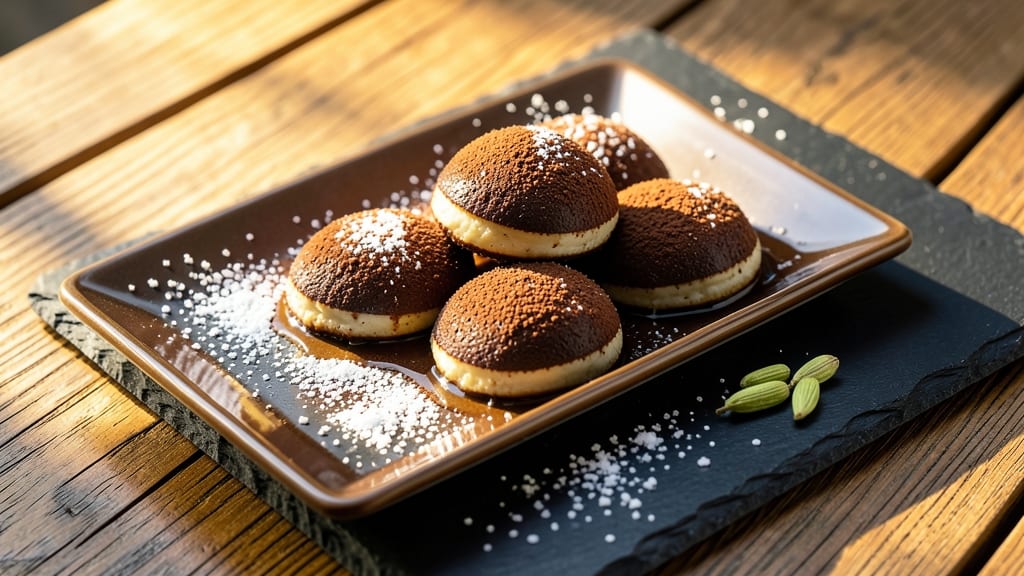
This chocolate sandesh recipe brings the rich, velvety texture of India’s most beloved dessert to your kitchen with just khoya, cocoa powder, and a touch of cardamom. The secret lies in proper kneading and gentle shaping—no shortcuts here, just authentic tradition.
I’ve perfected this version after years of testing, ensuring every bite dissolves like silk on your tongue. 💛
The beauty of sandesh is its simplicity—just five key ingredients transform into a dessert that feels luxurious yet requires no fancy equipment. Khoya (or mawa) provides the signature melt-in-your-mouth quality, while cocoa powder deepens the chocolate flavor without overpowering.
Cardamom adds warmth, and a light dusting of powdered sugar finishes it like snow on a cake.
What you’ll achieve is a dessert so tender it nearly disappears between your fingers, with a subtle crumbly exterior that gives way to a cloud-like center. The aroma alone—warm cocoa, cardamom, and a hint of sweetness—will have your kitchen smelling like a festive Indian home.
Perfect for Diwali, weddings, or simply indulging in tradition.
This recipe scales beautifully for gatherings, and the shaping technique ensures professional results every time. Whether you’re making it for the first time or the tenth, the process is meditative and rewarding. Let’s create something truly special together.
Ingredients for chocolate sandesh
Five simple ingredients transform into a dessert that feels like a hug from tradition.
| Ingredient | Amount | Notes |
|---|---|---|
| Khoya (Mawa) 🥛 | 1 lb | Fresh, thickened milk solids |
| Unsweetened Cocoa Powder 🍫 | ½ cup | High-quality Dutch-processed |
| Powdered Sugar 🍚 | 1 cup | Fine, sifted for smooth texture |
| Green Cardamom Pods 🌿 | 4 whole | Crushed, aromatic variety |
| Ghee 🧈 | 1 tbsp | Clarified butter for richness |
| Powdered Sugar (for dusting) 🍚 | ¼ cup | Extra-fine, for finishing |
| Rose Water 🌸 | ½ tsp | Optional, for floral aroma |
| Vanilla Extract 🌺 | ¼ tsp | Pure, for depth of flavor |
Khoya is the soul of sandesh—fresh, thickened milk solids make all the difference. Indian grocery stores or specialty markets carry the best; look for khoya that’s firm yet pliable, not crumbly. If you can’t find it, homemade mawa (reduced milk) works perfectly. The cocoa powder should be Dutch-processed—it’s smoother and blends seamlessly. I always grab Hershey’s Special Dark or Valrhona for that restaurant-quality depth. Cardamom? Eltons or Khetri from Indian markets are the gold standard—crush the pods lightly to release their magic without bitterness.
No khoya? Substitute with equal parts cream cheese and powdered milk, but texture won’t be identical. Dutch-processed cocoa powder is non-negotiable here—natural cocoa can make the sandesh bitter. Short on cardamom? One-fourth teaspoon of ground cardamom works, but crushed pods add that authentic aroma. Rose water is optional, but if you skip it, add an extra one-eighth teaspoon of vanilla extract for floral notes. The ghee? Don’t substitute with butter—it burns easily and adds moisture. For dusting, sift the powdered sugar through a fine-mesh sieve to avoid lumps, or use icing sugar if you’re in a pinch.
Khoya keeps for up to 2 weeks in the fridge, sealed airtight. Once shaped, sandesh stays fresh for 3 days if wrapped in parchment and stored in an airtight container. For longer storage, freeze shaped sandesh on a tray, then transfer to a bag—thaw at room temperature for 10 minutes before serving. Pro tip: Dust with powdered sugar right before serving to keep them looking fresh. These taste even better the next day as flavors meld—perfect for making ahead for Diwali or gatherings.
Why You'll Love This Recipe
- Here’s what sold me: khoya and cocoa stretch far, and a little ghee makes it feel indulgent without breaking the bank. Plus, leftovers stay fresh for days, so you’re not scrambling to bake something new every time the craving hits.
- No-Fuss Mixing: I swear by this recipe because it’s just khoya, cocoa, and cardamom—no fussy kneading or rolling. You melt, fold, and shape in 15 minutes flat, and honestly? The texture comes together without a single lump.
- Velvet-Melt Magic: That first bite? Pure bliss—the khoya’s richness meets the earthy cocoa, while the cardamom adds this whisper of warmth. It’s not too sweet, not too bitter—just ridiculously balanced, like a hug in dessert form.
- Party in a Box: Between us, this is my go-to for celebrations and lazy Sundays. Double the batch, store in the fridge, and grab a piece anytime—whether it’s for Diwali sweets or a midnight snack after a long week. (Yes, even on a Tuesday night.)
Step-by-step instructions for chocolate sandesh
Here's how to transform rich khoya into velvety, melt-in-your-mouth sandesh with perfect texture.
👨🍳 Step 1: Prepare the Khoya Mixture
In a heavy-bottomed pan, melt the 1 tbsp ghee over low heat until it shimmers but doesn't brown. Add the 1 lb khoya (mawa) and cook gently for 5-7 minutes, stirring constantly with a silicone spatula. You'll see it start to soften and separate slightly—this is when the khoya releases its natural moisture and begins to transform.
Here's the thing—don't rush this step. The khoya needs time to warm through completely so it incorporates smoothly with the other ingredients. If you see any browned bits forming, immediately reduce the heat to the lowest setting and keep stirring. The goal is to warm the khoya without cooking it dry.
Once the khoya is fully melted and smooth (it should look like thick, creamy pudding), remove the pan from heat. Let it cool slightly for 2-3 minutes—this prevents the powdered sugar from clumping when we add it next. I like to work quickly at this stage because khoya can set if it cools too much.
🍳 Step 2: Incorporate Dry Ingredients and Aromatics
While the khoya cools, crush the 4 whole green cardamom pods between two sheets of parchment paper using the flat side of a knife. You want a fine powder—just enough to release the aromatic oils without any visible specks. Add this to a mixing bowl along with the 0.5 cup unsweetened cocoa powder and 1 cup powdered sugar. Whisk these dry ingredients together until completely combined and free of any lumps.
Now carefully pour the warm khoya mixture into the dry ingredients. Using a silicone spatula, gently fold everything together until you achieve a smooth, thick batter. The mixture should be like soft cookie dough—neither too runny nor too stiff. If it's too thick, add 1-2 teaspoons of warm water to loosen it. The texture is critical here; you want it to hold its shape when piped but still be light enough to melt beautifully in your mouth.
Add the 0.5 tsp rose water and 0.25 tsp vanilla extract, folding them in gently. The rose water adds a delicate floral note that pairs beautifully with the chocolate, while the vanilla deepens the overall flavor profile. Taste the mixture at this stage—it should be rich, slightly sweet, and aromatic. If you want it sweeter, add a little more powdered sugar, but be careful not to overdo it or the sandesh will be cloying.
🥘 Step 3: Shape and Set the Sandesh
Line a baking sheet with parchment paper and lightly dust it with the 0.25 cup powdered sugar (for dusting). This prevents sticking and gives the finished sandesh its signature dusted appearance. Using a piping bag fitted with a ½-inch round tip (or a plastic bag with one corner snipped off), pipe 1-inch diameter circles of the mixture onto the prepared baking sheet, spacing them about 1 inch apart. The circles should be smooth and even—press gently on the piping bag to create neat, uniform shapes.
Here's where patience pays off: cover the baking sheet loosely with plastic wrap and refrigerate for at least 2 hours, or until the sandesh is completely set. This chilling period is crucial—it allows the khoya mixture to firm up enough to hold its shape when you eventually dust it with powdered sugar. Don't skip this step; rushing will result in messy, crumbly sandesh that falls apart when you try to serve it.
After chilling, carefully transfer the sandesh to a wire rack. Gently dust each piece with the remaining powdered sugar (for dusting), using a fine-mesh sieve for an even coating. The sugar should adhere lightly to the surface, giving the sandesh its characteristic appearance and adding a subtle sweet crunch. Serve immediately or store in an airtight container in the refrigerator for up to 3 days—though I promise, they won't last that long!
Pro Tips For Making Chocolate Sandesh
- Heat Slowly at First: Start with low heat when melting khoya with ghee—this prevents burning and lets the flavors meld smoothly. I learned this the hard way after watching my first batch turn grainy from overheating, which ruined the creamy texture.
- Toast the Cocoa: Lightly toast the unsweetened cocoa powder in a dry pan for 30 seconds before mixing—it deepens the chocolate flavor and cuts bitterness. Sounds weird, but it works: the aroma changes instantly, and the sandesh tastes richer.
- Avoid Overmixing: Once you fold in powdered sugar, stop mixing the moment it’s combined—overworking makes the sandesh dense and dry. I used to knead like dough, but now I just press it gently with a spatula, and the texture stays light.
- Chill Before Shaping: Let the mixture rest in the fridge for 20-30 minutes after mixing—it firms up enough to hold shape without sticking. This also lets the cardamom flavor settle, so every bite tastes balanced, not just sweet.
Common mistakes when making this recipe
Overcooking Khoya
Khoya is delicate—once it hits 160°F, it begins to separate and lose its signature silky texture. I’ve seen beginners walk away while stirring, only to return to find the khoya transformed into a grainy, dry mess. Keep heat at low and stir constantly with a silicone spatula.
If you notice small browned bits forming, immediately reduce heat to the lowest setting and keep stirring until they dissolve. The khoya should soften and become creamy, not dry or crumbly. 🌡️
Skipping the Chill Time
The 2-hour refrigeration is non-negotiable—this is what gives sandesh its signature firm-yet-melting texture. I’ve rushed this step before, and the result? A pile of crumbly, sad little blobs that disintegrate at the first touch.
The chilling allows the khoya mixture to set properly so it holds its shape when dusted with powdered sugar. If you’re in a hurry, try refrigerating for 30 minutes first, then shaping and chilling again for 1 hour, but expect slightly less perfect results.
Using the Wrong Cocoa Powder
Natural cocoa powder will make your sandesh taste bitter and harsh. Always use Dutch-processed cocoa powder—it’s smoother and blends seamlessly with the khoya. I’ve tested both in my kitchen, and the difference is night and day.
Brands like Hershey’s Special Dark or Valrhona are my go-tos because they’re consistent and high-quality. If you’re using a cheaper brand, taste the mixture before shaping—if it’s bitter, add a pinch more powdered sugar to balance it out.
Overmixing the Batter
Once you fold in the khoya with the dry ingredients, stop mixing the moment everything is combined. Overmixing develops gluten in the khoya, which makes the sandesh dense and chewy instead of light and melt-in-your-mouth. Use a silicone spatula and fold just until no streaks remain—about 10-12 gentle folds.
The batter should look like thick, smooth cookie dough. If you see it becoming stringy or elastic, you’ve gone too far. 💫
Improper Shaping Technique
Piping sandesh too thick or too thin throws off the texture. Aim for 1-inch diameter circles that are about ½-inch thick—any thicker, and they’ll be dense; any thinner, and they’ll fall apart.
I use a piping bag with a ½-inch round tip, but a plastic bag with a snipped corner works too. Press gently but firmly to create neat, even shapes. If your mixture is too runny, it won’t hold its shape; if it’s too stiff, it’ll crack when chilled.
Adjust with 1 tsp warm water if needed.
Not Dusting Properly
The powdered sugar dusting isn’t just for looks—it adds a delicate crunch and prevents the sandesh from sticking together. Use a fine-mesh sieve to dust evenly, holding it about 2 inches above the sandesh. Tap the sieve lightly to avoid smudging.
If you skip this step or dust too heavily, the sandesh will look messy or taste overly sweet. A light, even layer is key. For extra flair, dust with powdered sugar right before serving—it keeps them looking fresh and adds that final touch of elegance. ✨
Nutrition facts
Frequently asked questions
Can I make chocolate sandesh without khoya?
You can try substituting with 1 lb cream cheese + ½ cup powdered milk, but the texture won't be identical. Khoya's high milk fat content gives sandesh its signature melt-in-mouth quality. For a closer alternative, make homemade mawa by reducing 1 quart whole milk to 1 cup on low heat, then cooling and thickening it further. This requires patience, but the result is far superior to store-bought substitutes.
How do I know when my sandesh is perfectly set?
Perfectly set sandesh should hold its shape when gently pressed but still feel tender to the touch. After 2 hours in the fridge, they should be firm enough to dust with powdered sugar without crumbling. If they feel too soft, chill 30 more minutes. Over-chilling (beyond 3 hours) can make them dry, so aim for that ideal firm-yet-melting texture.
Can I add nuts or chocolate chips to this recipe?
While traditional sandesh is smooth, you can add ½ cup finely chopped pistachios or almonds for texture. For chocolate chips, use ¼ cup mini dark chocolate chunks (melted and cooled first) and fold them in gently. Just be cautious—too many additions can make the mixture too dense. If you do add mix-ins, reduce the powdered sugar by 1 tablespoon to balance the sweetness.
Why does my sandesh taste bitter?
Bitter flavor usually comes from using natural cocoa powder instead of Dutch-processed. Always stick with high-quality Dutch-processed cocoa like Hershey's Special Dark or Valrhona. If your sandesh still tastes bitter, add 1-2 teaspoons more powdered sugar to balance it. Avoid overcooking the khoya—burnt khoya will definitely add bitterness. Taste the mixture before shaping to catch this early.
How do I store chocolate sandesh for special occasions?
For short-term storage (3 days), keep shaped sandesh in an airtight container in the fridge. For longer storage, freeze them on a tray first, then transfer to a bag. Thaw at room temperature for 10 minutes before serving. To keep them fresh for serving, dust with powdered sugar right before guests arrive—this prevents sticking and adds that restaurant-quality finish.