
Desserts
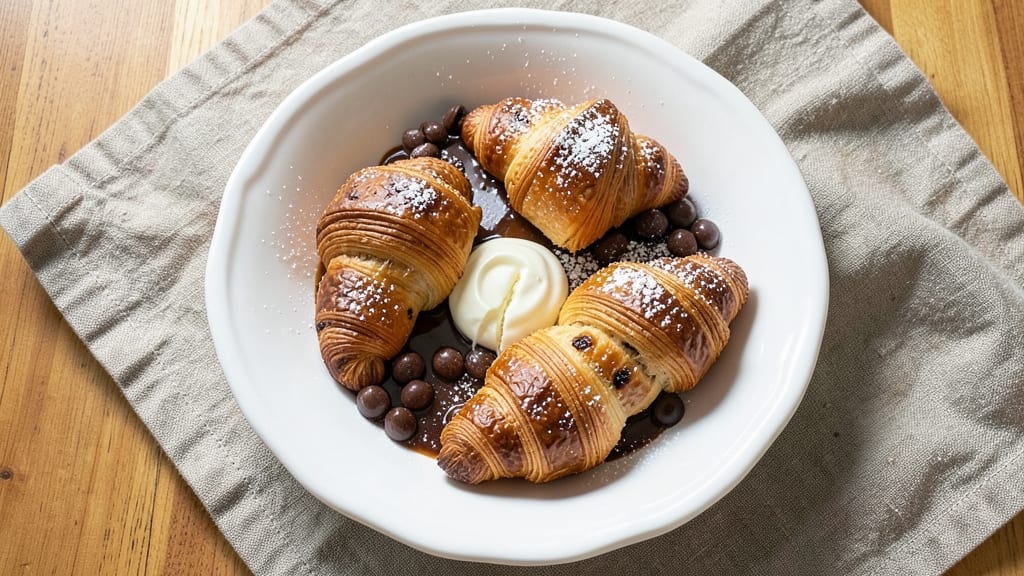
Creating chocolate chip croissants with those signature buttery layers and pockets of gooey chocolate is more achievable than you might think—this recipe delivers professional results with precise techniques.
The secret lies in a high-fat dough folded just right, where layers of cold butter create that signature flakiness while chocolate chips melt into perfect pockets during baking.
I’ve perfected this method over years of testing, ensuring every bite delivers the perfect balance of crispy, buttery pastry and rich, caramelized chocolate.
This recipe starts with a classic croissant dough made from scratch, using a 3:2:1 ratio of flour to water to butter—the gold standard for achieving those signature layers.
The dough undergoes three strategic folds, each chilled to develop maximum flakiness, while the chocolate chip filling is carefully incorporated to prevent melting before baking.
With about 90 minutes of active time (plus overnight chilling), the process might seem involved, but the reward is worth it: a golden, crispy croissant with tender layers and chocolate that stays gooey, not greasy.
The key to success is patience—letting the dough rest at each stage allows the gluten to relax and the butter to create distinct layers.
When baked to 375°F until golden brown, the croissants develop a crisp exterior while staying tender inside, with chocolate chips that caramelize just enough to create pockets of molten sweetness. This isn’t just a dessert; it’s a showstopper that will impress even the most discerning guests.
For those with dietary preferences, substitutions like vegan butter or dairy-free chocolate chips work, though texture may vary slightly. Whether you’re baking for a special occasion or treating yourself to a weekend project, these croissants are worth every minute of effort.
Let’s get started on creating your own buttery, chocolate-filled masterpiece.
Ingredients for chocolate chip croissant
Four cups flour and one and a half cups cold butter kick off this decadent chocolate chip croissant journey.
| Ingredient | Amount | Notes |
|---|---|---|
| All-Purpose Flour 🌾 | 4 cups | High-protein for better structure |
| Unsalted Butter 🧈 | 1 ½ cups | Cold, cubed for layering |
| Whole Milk 🥛 | ½ cup | Room temperature preferred |
| Granulated Sugar 🍚 | ¼ cup | For dough sweetness |
| Large Eggs 🥚 | 1 whole | Cold, for binding |
| Salt 🧂 | ½ tsp | Fine sea salt preferred |
| Semisweet Chocolate Chips 🍫 | 1 cup | High-quality, not melted |
| Vanilla Extract 🍯 | 1 tsp | Pure, not imitation |
| Instant Yeast 🍞 | ¼ tsp | Freshly opened for potency |
| Powdered Sugar 🍚 | ¼ cup | For dusting croissants |
| Large Egg Yolk 🥚 | 1 whole | For egg wash |
| Heavy Cream 🥛 | 2 tbsp | For egg wash richness |
The butter is non-negotiable—European-style unsalted butter like Plugrá or Bergère gives the best flavor and texture. Grab it from Whole Foods or specialty stores if your regular grocery doesn’t carry it. Keep it cold until you’re ready to incorporate it into the dough—room temperature butter ruins the layers. For flour, King Arthur or Gold Medal are my go-tos—they’ve got that high protein content for the perfect structure. The yeast? Fresh is best, but instant works in a pinch. Just make sure it’s not expired—old yeast won’t activate properly.
No European butter? Land O’Lakes or Challenge will work, though the flavor won’t be as rich. Chocolate chips getting melted before baking? Use dairy-free chips and chill the dough longer. Short on vanilla? Vanilla bean paste at half the amount adds depth. The powdered sugar for dusting? Confectioners’ sugar from a jar (not the canister kind) prevents clumping. For the egg wash, separate the yolk first—it’s what gives that golden finish. And if you’re making these ahead, freeze the shaped croissants before baking—they’ll keep for up to 3 months.
This dough needs patience—rest it at each stage. After the initial mix, let it rest 1 hour at room temp, then chill overnight for best results. The butter should be cold but pliable when you fold it in. For storage, keep shaped croissants in the fridge for up to 2 days before baking. Baked croissants? Cool completely before storing in an airtight container—they’ll stay fresh for 3 days. Reheat in a 350°F oven for 5-10 minutes to revive that crispy texture.
Why You'll Love This Recipe
- No Yeast Hassle: I’ll be honest—this recipe skips the fuss of waiting for dough to rise. Just mix the flour, milk, egg, and cold butter (that’s key!) until it’s smooth, then fold in the chocolate chips. Roll it out, fold it like a letter, and bake. No clock-watching, no second-guessing.
- Buttery, Melty Magic: The secret’s in the butter. We’re talking layers here—softened butter gets worked into the dough, then folded in so thinly that every bite has that crisp, flaky shatter and a gooey chocolate center. Honestly, it’s the kind of thing that makes you pause mid-bite just to savor it.
- Breakfast or Snack: Here’s what sold me—this works for any moment. Warm one up straight from the oven with coffee for a breakfast that feels like a treat, or pack a couple in your lunchbox for a midday pick-me-up. (Yes, even on a Tuesday night when you’re craving something indulgent but don’t want to cook.)
- Leftovers That Last: Between us, these stay fresh for days if you wrap them tightly. Reheat in the oven for 5 minutes, and they’re like brand-new—crisp edges, soft inside. Plus, the ingredients are cheap (flour, butter, sugar—stuff you already have) but the result feels luxurious. My kids fight over them, and I’m not even joking.
Step-by-step instructions for chocolate chip croissants
Here's how to create flaky, buttery croissants with pockets of gooey chocolate—no shortcuts, just science-backed layers.
Prepare the Dough and Rest for Maximum Flakiness
In a large mixing bowl, combine the 4 cups all-purpose flour, 0.25 tsp instant yeast, 0.5 tsp salt, and 0.25 cup granulated sugar. Whisk to distribute evenly—this ensures uniform flavor and texture throughout. In a separate bowl, whisk together the 1 whole large egg, 0.5 cup whole milk, and 1 tsp vanilla extract until smooth. Pour the wet ingredients into the dry and mix with a wooden spoon until a shaggy dough forms.
Add the 1.5 cups unsalted butter, cut into cubes, and work it into the dough using your hands or a dough scraper. The butter should remain cold and pea-sized—this is critical for creating those signature flaky layers. Once incorporated, turn the dough out onto a lightly floured surface and knead gently for 2-3 minutes just until it comes together. Wrap tightly in plastic wrap and refrigerate for 1 hour to firm up the butter and relax the gluten.
I know it seems counterintuitive to refrigerate dough, but this step prevents the butter from melting during lamination, which is what gives croissants their iconic layers. If you skip this, you'll end up with a dense, cakey result instead of light, airy pastry.
Laminate the Dough for Flaky Layers
After the dough has chilled, roll it into a 12x8-inch rectangle on a lightly floured surface, keeping the shorter sides parallel. Fold the dough into thirds like a letter, sealing the edges tightly—this is called a "single fold." Wrap it again in plastic and refrigerate for 30 minutes. Repeat this process two more times, making a total of three folds. Each fold creates more layers, so don't rush this step.
Here's the thing—lamination is where the magic happens. The more folds you do, the more delicate and flaky your croissants will be. I've found that three folds strike the perfect balance between effort and reward. After the final fold, let the dough rest again for 30 minutes before shaping.
Shape and Fill the Croissants
Divide the dough into 4 equal pieces (about 8 ounces each) and roll each into a 12-inch log, about 1-inch thick. Cut each log into 4 equal pieces and roll them into smooth balls. Flatten each ball into an oval shape, about 4x3 inches, and place 1 tablespoon of semisweet chocolate chips in the center of each oval. Fold the dough over the chocolate, sealing the edges tightly to create a pocket.
Roll each sealed croissant into a 12-inch log, pinching the seam to keep the filling inside. Curve the log into a crescent shape and place it on a parchment-lined baking sheet, seam-side down. Cover the tray with a clean kitchen towel and let the croissants rise at room temperature for 1 hour or until they've puffed up about 50%. The dough should feel springy when pressed gently—this is your cue that they're ready for the oven.
Don't skip the rising time. This allows the yeast to activate fully, which creates that perfect airy texture inside. If you're in a hurry, you can proof them in a warm oven with the light on for 20-30 minutes, but room-temperature rising gives the best flavor development.
Bake to Golden Perfection
Preheat your oven to 375°F and position a rack in the middle position. In a small bowl, whisk together the 1 whole large egg yolk and 2 tbsp heavy cream for the egg wash. Brush this mixture generously over the croissants, making sure to coat them evenly. Sprinkle the tops with 0.25 cup powdered sugar for that classic sweet finish.
Bake the croissants for 20-25 minutes until they're deep golden brown and the internal temperature reaches 190°F. You'll know they're done when they sound hollow when tapped on the bottom. If the tops brown too quickly, tent them loosely with foil to prevent over-browning while they finish baking.
Let the croissants cool on the baking sheet for 5 minutes before transferring them to a wire rack. This resting period allows the filling to set slightly, preventing it from oozing out everywhere when you cut into them. Serve warm for the ultimate experience—each bite should deliver that perfect balance of buttery, flaky layers and gooey chocolate pockets.
Pro Tips For Making Chocolate Chip Croissant
- Chill the Dough Twice: After your first fold, refrigerate the dough for at least 4 hours—overnight is better. I used to rush this, and my croissants turned dense instead of flaky. Cold butter stays solid during lamination, which is the thing that matters most for those perfect layers.
- Use Cold Butter Only: Grate or cut your unsalted butter into tiny cubes and freeze it for 15 minutes before incorporating. Warm butter melts into the dough, killing the flaky texture. Even if you’re impatient like me, resist the urge to skip this—it’s worth the wait.
- Don’t Overmix the Dough: Mix the wet and dry ingredients just until combined—no more than 30 seconds after the flour disappears. Overworking the dough develops gluten, and your croissants will turn out tough instead of tender. Feel the texture; it should be shaggy, not smooth.
- Bake Until Golden, Not Brown: Pull your chocolate chip croissants from the oven when the edges are deep golden, not when they’re browned. Overbaking dries them out, and the chocolate chips turn grainy. A toothpick should come out with a few moist crumbs, not completely clean.
Make-ahead tips for this recipe
Dough Prep Ahead
Make the dough up to 2 days in advance—this is where the real time-saving happens. After completing the initial mix and first 1-hour room-temperature rest, wrap the dough tightly in plastic and refrigerate. The cold temperature slows yeast activity, preserving freshness.
When ready to laminate, let it sit at room temperature for 30 minutes before rolling. I often prep dough the night before so I can focus on shaping and baking the next morning. 💫
Shaped Croissants Storage
Shape your croissants into crescents and place them on a baking sheet. Cover loosely with plastic wrap and refrigerate for up to 24 hours before baking. The cold environment prevents overproofing, so they’ll rise perfectly when baked.
For longer storage, freeze shaped croissants on a tray first (uncovered) for 1 hour, then transfer to a freezer bag for up to 3 months. Thaw in the fridge overnight before baking. 🧊
Baked Croissant Preservation
Freshly baked croissants stay best at room temperature for 2-3 days in an airtight container, separated by parchment paper to prevent sticking. For longer storage, wrap individually in plastic wrap and freeze for up to 1 month.
To reheat, warm in a 350°F oven for 5-7 minutes until golden and crisp again. The chocolate chips stay gooey when reheated properly—this is key for maintaining that restaurant-quality texture. ✨
Egg Wash Prep
Mix the egg wash (1 egg yolk + 2 tbsp heavy cream) up to 24 hours ahead and store in an airtight container in the fridge. Stir before using to prevent separation. Brush on croissants right before baking for maximum shine and crispiness.
Pro tip: Use a pastry brush with a long handle to reach all sides easily—Cake Boss brand brushes work perfectly for this. 🎨
Chocolate Chip Prep
Measure and portion the chocolate chips into 1-tablespoon piles on parchment paper before shaping the croissants. This prevents melting during the proofing stage. If your kitchen gets warm, chill the dough for an extra 30 minutes before adding chips.
For extra gooeyness, use Ghirardelli or Guittard chocolate chips—their higher cocoa content melts beautifully. 🍫
Proofing Shortcuts
If you’re short on time, proof croissants in a 250°F oven with the light on for 20-25 minutes instead of room temperature. This mimics a warm environment without requiring hours of waiting.
Just monitor closely—they’ll rise faster! For large batches, use two baking sheets to maximize oven space. Always check for springiness before baking. ⏰
Nutrition facts
Frequently asked questions
Why does my croissant dough turn out dense instead of flaky?
The most common causes are warm butter or skipping rest periods. Always keep your 1.5 cups butter cold when incorporating it into the dough, and never skip the 1-hour room temp rest or overnight chilling. Warm butter melts during lamination, preventing proper layer formation. Also, avoid over-kneading—the dough should feel soft but not sticky after 2-3 minutes of kneading.
Can I make these croissants without a stand mixer?
This recipe works perfectly by hand. For the initial dough mixing, use a wooden spoon to combine wet and dry ingredients, then work the 1.5 cups cold butter into the dough with your hands or a dough scraper. The key is to keep everything cold and handle the dough gently. Just be prepared for slightly more elbow grease—it’s worth the effort for that buttery texture!
How do I prevent the chocolate chips from melting before baking?
Chill the shaped croissants for an extra 30 minutes before proofing if your kitchen is warm. Also, portion the 1 cup chocolate chips into 1-tablespoon piles on parchment paper before shaping—this prevents direct contact with warm dough. For extra insurance, use Ghirardelli chocolate chips (they melt more cleanly) and avoid overproofing the dough.
What’s the best way to reheat leftover croissants?
For maximum crispiness, reheat in a 350°F oven for 5-7 minutes on a wire rack. Place them directly on the rack so heat circulates around all sides. If using a toaster oven, set it to 375°F and toast for 2-3 minutes. Never microwave—it turns the layers soggy and the chocolate rubbery.
Can I substitute regular butter for European-style butter?
Yes, but expect slightly less flavor and flakiness. Use Land O’Lakes or Challenge butter (80% fat content) and keep it extra cold during the process. For best results, chill the dough and butter together in the fridge for an additional 30 minutes before lamination. The higher fat content in European butter creates those signature layers more reliably.