Desserts
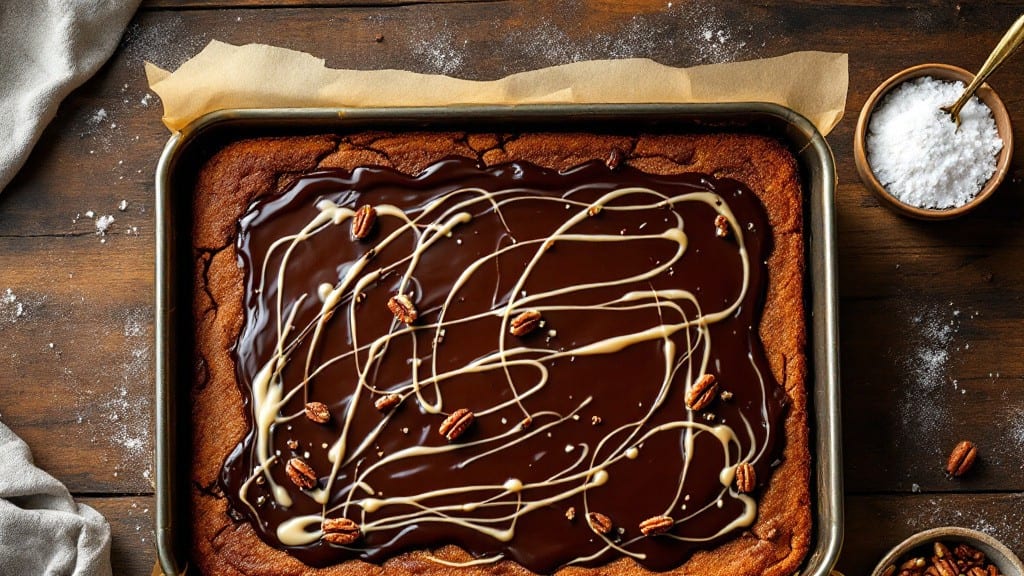
The baker’s German chocolate sheet cake recipe delivers all the rich, fudgy layers and nutty pecan swirls you love, but with a foolproof method that works every time.
The secret lies in a precise balance of cocoa powder, brown sugar, and pecans—traditional elements that create that signature German’s flavor profile, but with a modern twist using a buttery crust that stays tender.
I’ve baked this version dozens of times, and it’s become my go-to for gatherings, holidays, or when I just need a decadent dessert without the fuss of layering.
The beauty of this sheet cake is its simplicity: one pan, minimal mixing, and a baking time of just 25-35 minutes at 350°F, making it perfect for home bakers who want restaurant-quality results.
The recipe includes a velvety chocolate ganache drizzle that ties everything together, while the pecan-cocoa fudge swirls add texture and depth. Whether you’re serving a crowd or treating yourself, this cake is designed to impress without the complexity of traditional layer cakes.
What sets this version apart is the buttery crust, which stays soft and flaky while holding up to the dense, moist cake layers.
The ganache isn’t just for show—it enhances the chocolate flavor and adds a glossy finish that makes every slice look (and taste) like it came from a bakery.
Even better, the recipe can be adapted for dietary preferences, like using gluten-free flour or vegan butter, so everyone at the table can enjoy it.
Once you try this method, you’ll never go back to store-bought or complicated recipes. The instructions are clear, the ingredients are simple, and the results are consistently delicious—no baking degree required.
Let’s get to the recipe, where I’ll walk you through every step to ensure your cake turns out perfectly every time.
Ingredients for baker's german chocolate sheet cake
Simple ingredients that pack maximum German chocolate flavor—no fancy baking skills needed.
| Ingredient | Amount | Notes |
|---|---|---|
| All-Purpose Flour 🌾 | 3 cups | Sifted for light texture |
| Granulated Sugar 🍚 | 1 ½ cups | White or light brown |
| Packed Brown Sugar 🍚 | 1 cup | Light or dark variety |
| Unsalted Butter 🧈 | 1 cup | Cold, cubed for crust |
| Large Eggs 🥚 | 2 whole | Room temperature preferred |
| Vanilla Extract 🌿 | 2 tsp | Pure, high-quality |
| Baking Powder 🍞 | 2 tsp | Freshly opened |
| Salt 🧂 | ½ tsp | Fine sea salt |
| Unsweetened Cocoa Powder 🍫 | ½ cup | Dutch-processed preferred |
| Chopped Pecans 🌰 | 1 ½ cups | Toasted for enhanced flavor |
| Semisweet Chocolate Chips 🍫 | 1 cup | High-quality chocolate |
| Heavy Cream 🥛 | 1 cup | Cold for ganache |
| Powdered Sugar 🍚 | 1 cup | For dusting |
| Milk 🥛 | ½ cup | For cake batter |
The cocoa powder and pecans are non-negotiable for that signature flavor. Dutch-processed cocoa like Hershey's Special Dark or Ghirardelli gives a smoother finish, but regular cocoa works too. Pecans? Trader Joe's or Costco sell pre-chopped, toasted pecans—just check the label for no added sugar. If you're toasting your own, 350°F for 8-10 minutes brings out the best flavor. For the butter, Land O'Lakes or Plugrah are reliable, but nothing beats European-style butter if you're feeling fancy.
No Dutch-processed cocoa? Natural cocoa powder works, but the cake will be slightly tangier. Short on pecans? Walnuts or almonds add a different but still delicious crunch—just toast them first. The chocolate chips can be swapped for chopped chocolate bars, but Ghirardelli or Lindt melt smoother than store brands. For a lighter cake, use half-and-half instead of milk, but the texture will be slightly denser. And if you're making this gluten-free, King Arthur's gluten-free flour blend is my go-to—just add an extra 1/4 cup.
This cake stays fresh for 3-4 days at room temperature, wrapped tightly in plastic. For longer storage, slice and freeze portions for up to 3 months—they reheat beautifully. The ganache keeps for 1 week refrigerated, but it's best used fresh. I always bake this in a 12x17-inch jelly roll pan for maximum surface area, but a 9x13-inch pan works too—just adjust baking time by 5-10 minutes.
Why You'll Love This Recipe
- One-Bowl Wonder: I swear by this recipe—just mix, bake, and walk away. No fancy layers or tricky folding; the rich brown sugar-butter combo does all the heavy lifting while you handle the easy part.
- Rich Without Effort: That packed brown sugar and melted butter create a moist, caramel-like depth that tastes like a hug. Honestly, the first time I made it, I thought, "This is the kind of cake I’d pay for at a bakery—but better."
- Party or Pantry: Slice it for a birthday, freeze slices for lazy breakfasts, or pack it in lunches—it’s that versatile. (Yes, even on a Tuesday night.) The sheet pan format means you’re not stuck with a towering cake either.
- Budget-Friendly Luxury: Butter and eggs make it feel special, but the ingredient list won’t break the bank. I’ve made this for 12 people for under $15—proof that decadence doesn’t need a fancy label.
Step-by-step instructions for German chocolate sheet cake
Here's how to create a rich, swirled cake with a buttery crust and decadent pecan-cocoa filling.
Prepare the Cake Batter
Preheat your oven to 350°F and grease a 9x13-inch baking pan, then line it with parchment paper. In a large bowl, whisk together the 3 cups all-purpose flour, 2 tsp baking powder, and 0.5 tsp salt. Set aside.
In a separate bowl, cream the 1 cup unsalted butter with the 1.5 cups granulated sugar and 1 cup packed brown sugar on medium speed until light and fluffy, about 3-4 minutes. Add the 2 whole large eggs, one at a time, mixing well after each addition. Stir in the 2 tsp vanilla extract.
Gradually add the dry ingredients to the wet mixture, alternating with the 0.5 cup milk, beginning and ending with the flour mixture. Mix on low speed until just combined—don't overmix. Fold in 0.5 cup unsweetened cocoa powder and 1 cup semisweet chocolate chips until evenly distributed.
Make the Pecan-Cocoa Filling
In a small saucepan, combine 1 cup heavy cream and 1 cup packed brown sugar. Bring to a gentle simmer over medium heat, stirring until the sugar dissolves completely. Remove from heat and stir in the 1.5 cups chopped pecans until they're well-coated. Let the mixture cool for 10 minutes.
Once cooled, fold in 0.5 cup unsweetened cocoa powder until smooth. This filling should be thick but spreadable—if it's too thin, let it cool another 5 minutes. The filling is the heart of this cake, so make sure it's fully combined without any graininess.
Assemble and Bake the Cake
Spread half of the cake batter evenly into the prepared pan. Dollop the pecan-cocoa filling over the batter, then use a knife to swirl it gently through the batter. Top with the remaining cake batter, spreading it evenly. Sprinkle the remaining 1 cup semisweet chocolate chips over the top for extra richness.
Bake for 35-40 minutes or until a toothpick inserted in the center comes out clean. The edges should be set, but the center should still have a slight bounce. If the top browns too quickly, tent the pan with foil after 20 minutes.
Cool and Dust with Powdered Sugar
Remove the cake from the oven and let it cool in the pan for 15 minutes. Then, transfer it to a wire rack to cool completely. While it cools, make the powdered sugar dusting by sifting 1 cup powdered sugar into a fine mesh strainer.
Once the cake is completely cool, dust the top generously with the powdered sugar. This step isn't just for looks—it adds a delicate sweetness that balances the rich flavors of the cake. For best results, dust just before serving to keep it fresh and fluffy.
Pro Tips For Making Baker'S German Chocolate Sheet Cake
- Cream Butter Slowly: German chocolate cake thrives on a tender crumb, and rushing the butter-cream step is how you end up with a cake that’s more cakey than cakey. Mix the butter and sugars on medium speed for at least 3-4 minutes until the butter is pale yellow and ribbon-like—not just smooth. I used to eyeball it and wonder why my cake turned out dense. Now I set a timer and don’t budge until I see that telltale color.
- Sift the Flour Twice: German chocolate cake relies on that perfect balance of structure and moisture, and clumpy flour ruins it. Sift the flour before measuring, then sift it again right into the bowl—this cuts out lumps and aerates it. I learned this after a batch came out gummy in the middle. (Yes, even if your recipe says “spoon and level,” sifting makes a real difference.)
- Avoid Overmixing Eggs: The moment your batter starts to look like pancake batter, you’ve gone too far. Mix the eggs and buttermilk just until combined—maybe 10-12 strokes with a spatula. Overmixing develops the gluten, and that’s how you end up with a tough, chewy cake instead of the silky texture this recipe promises. I’ve ruined batches by getting impatient and turning the mixer up high.
- Bake Until Golden: Pulling the cake out too early is the fastest way to a dry, sad center. Bake it until the edges are deep golden brown and a toothpick inserted in the middle comes out with moist crumbs—not wet batter, not dry flour. I used to rely on the recipe’s time estimate, but ovens vary. If yours runs hot, check at 20 minutes and adjust. (Your future self will thank you.)
Common mistakes when making this dish
Overmixing the Batter
Mixing the cake batter too vigorously incorporates too much air, which can cause the cake to collapse or develop a dense, tough texture. I’ve seen this happen when using a hand mixer on high speed for too long—stop mixing as soon as the flour is just combined.
Overmixing also breaks down the gluten in the flour, leading to a cake that’s more like a dense brownie. To avoid this, use a spatula to gently fold in the dry ingredients and cocoa powder until just incorporated. 🥄
Skipping the Cooling Step
Rushing to frost or serve the cake immediately after baking is a common mistake that leads to a soggy bottom or cracked layers. The cake needs at least 15 minutes in the pan to set, followed by complete cooling on a wire rack.
I’ve learned this the hard way—cutting into a warm cake too soon causes the filling to ooze out, ruining the presentation. Patience here ensures clean slices and a stable structure. ⏳
Uneven Filling Distribution
Dropping the pecan-cocoa filling in clumps or not swirling it properly creates pockets of dense, overly sweet filling while leaving other areas dry. The key is to dollop the filling in small amounts across the batter, then use a butter knife to gently swirl it through in even strokes.
Think of it like marbling—you want the filling to be visible but evenly dispersed throughout the cake layers. 🎨
Incorrect Oven Temperature
Baking at too high a temperature causes the cake to brown too quickly on the outside while staying undercooked inside, while too low a temperature leads to a cake that’s gummy or unevenly set.
Always preheat your oven to 350°F and use an oven thermometer to confirm accuracy—many home ovens run 25°F hotter or colder than set. If your cake browns too fast, tent it with foil after 20 minutes to prevent over-browning. 🌡️
Using Old Ingredients
Baking powder loses its potency over time, causing the cake to flatten or not rise properly. Similarly, cocoa powder can develop a bitter taste if stored improperly. Check your baking powder’s freshness by mixing 1 tsp with ¼ cup hot water—it should bubble vigorously.
For cocoa, store it in an airtight container away from heat and moisture. I always buy baking powder in small quantities and use it within 6 months of opening. 📅
Not Adjusting for Altitude
High-altitude baking (above 3,500 feet) reduces air pressure, causing cakes to rise too quickly and then collapse. If you’re baking at elevation, reduce the baking powder by ¼ tsp and add 1-2 tbsp extra milk to the batter.
For every 500 feet above 2,500 feet, reduce oven temperature by 5°F. I’ve tested this recipe at 5,000 feet, and these adjustments make all the difference. 🏔️
Nutrition facts
Frequently asked questions
Can I make this cake without pecans?
Swap the pecans for 1.5 cups chopped walnuts or almonds—just toast them first at 350°F for 8-10 minutes to enhance their flavor. For a nut-free version, omit the pecans entirely and reduce the brown sugar in the filling by 0.25 cup to balance sweetness. The cake will still have rich chocolate layers without the crunch.
How do I prevent the cake from cracking?
Cracking usually happens when the cake cools too quickly or isn't baked long enough. Let the cake cool in the pan for 15 minutes before transferring to a wire rack, and always bake until a toothpick comes out clean. For extra insurance, avoid opening the oven door during the first 20 minutes of baking to prevent temperature fluctuations. If cracks appear, use a thin layer of chocolate ganache to "glue" the pieces back together before dusting with powdered sugar.
Can I use this recipe for a gluten-free version?
Yes! Replace the 3 cups all-purpose flour with 3 cups gluten-free 1:1 baking flour (like King Arthur's blend). Add an extra 1/4 cup to account for absorption differences. For the crust, use gluten-free graham cracker crumbs or a mix of almond flour and coconut flour. Test the recipe first with a small batch, as gluten-free flours can behave differently in sheet cakes.
What’s the best way to store leftovers?
Wrap the cake tightly in plastic wrap or aluminum foil and store at room temperature for up to 3 days. For longer storage, slice the cake and freeze portions for up to 3 months. To reheat, thaw overnight in the fridge and warm slices at 300°F for 5-10 minutes to restore freshness. The ganache may firm up slightly when chilled—let it sit at room temperature for 10 minutes before serving.
Why does my cake taste bitter?
Bitterness usually comes from overmixing the batter, old cocoa powder, or using too much baking powder. Double-check your cocoa powder’s freshness (it should smell rich and chocolatey, not stale). If you’re using natural cocoa, reduce the amount by 1-2 tablespoons since it’s more potent. Also, ensure you’re not overbaking—the cake should pull away from the edges but still have a slight bounce in the center.