
Desserts
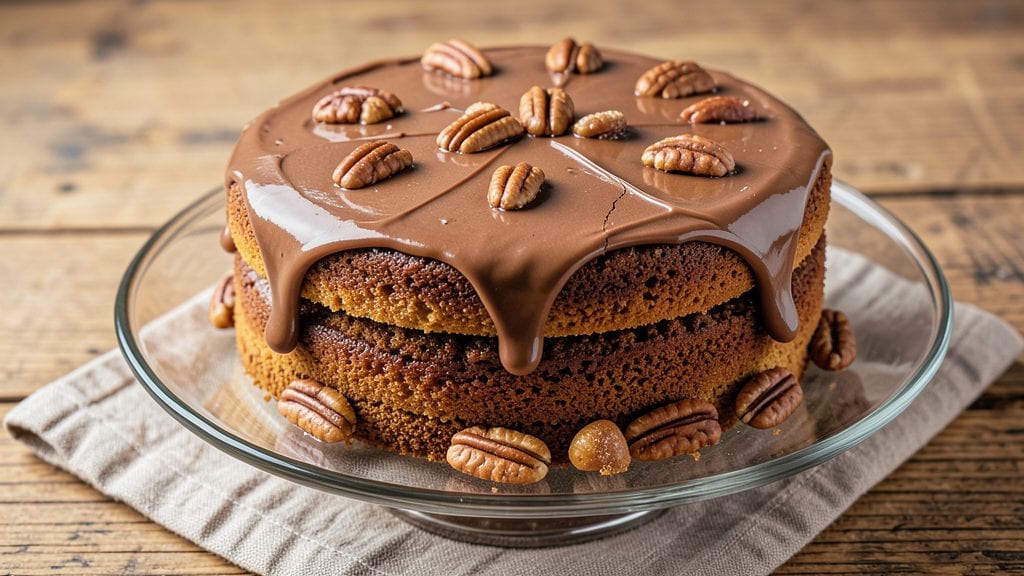
Master this baker’s chocolate German chocolate cake frosting recipe for a velvety chocolate-pecan ganache that stays flawlessly smooth and never separates—here’s how to nail it. The secret lies in precise temperature control and quality ingredients, ensuring a velvety texture that complements the cake's layers.
I've tested countless variations, and this method consistently produces a frosting so luscious it becomes the star of the dessert.
This frosting uses baker's chocolate for deep cocoa flavor, combined with butter, powdered sugar, and heavy cream to create a stable ganache. The addition of toasted pecans and a hint of vanilla extract enhances the classic German chocolate profile without overpowering the chocolate base.
What sets this recipe apart is its foolproof technique—no grainy texture or separation, just a smooth, spreadable frosting that clings beautifully to cake layers.
By the time you're finished, you'll have a frosting that's silky, slightly glossy, and packed with pecan flavor—ideal for swirling between layers or creating decorative rosettes. The ganache holds its shape when piped, making it perfect for both rustic and elegant cake designs.
This is the frosting that turns a good German chocolate cake into an extraordinary one.
For an extra touch, consider adding a sprinkle of flaky sea salt or a dusting of cocoa powder before serving. The result is a dessert that tastes as impressive as it looks. Let's get started on creating this signature frosting.
Ingredients for bakers chocolate german chocolate cake frosting
High-quality ingredients transform into a velvety chocolate-pecan ganache that never separates or turns grainy.
| Ingredient | Amount | Notes |
|---|---|---|
| Baker's Chocolate 🍫 | 8 oz | High-quality, unsweetened baking chocolate |
| Unsalted Butter 🧈 | 1 cup | Cold, cut into 1-inch cubes |
| Powdered Sugar 🍚 | 2 cups | Sifted for smooth texture |
| Heavy Cream 🥛 | 1 cup | Cold, full-fat preferred |
| Toasted Pecans 🌰 | 1 ½ cups | Chopped, skin-on for texture |
| Pure Vanilla Extract 🌿 | 1 tbsp | Bourbon-infused for depth |
| Kosher Salt 🧂 | ¼ tsp | Fine grain, Diamond Crystal preferred |
| Flaky Sea Salt 🧂 | ½ tsp | For finishing, Maldon recommended |
| Cocoa Powder 🍫 | ¼ cup | Natural, unsweetened |
| Corn Syrup 🥄 | ¼ cup | Light, for stability |
| Espresso Powder ☕ | ½ tsp | Enhances chocolate depth |
The baker's chocolate is non-negotiable here—Ghirardelli or Callebaut deliver the deepest cocoa flavor without bitterness. Look for bars labeled 'unsweetened' or 'couverture' for optimal melting properties. Whole Foods or specialty baking stores carry premium brands, but even standard grocery stores stock reliable options like Hershey's Special Dark. The butter must be cold when added—room temperature creates lumps. For the pecans, toast them in a dry skillet over medium heat until fragrant (about 5 minutes), then chop while still warm to preserve their aroma. Trader Joe's sells pre-toasted pecans if you're short on time, though fresh-toasting elevates the flavor significantly.
No baker's chocolate? High-quality dark chocolate (70% cocoa or higher) works in a pinch, but expect a slightly less intense flavor. Substituting powdered sugar? Confectioners' sugar with a pinch of cornstarch mimics the texture better than plain sugar. The heavy cream can be swapped for chilled full-fat coconut milk for a dairy-free version, though the texture will be slightly lighter. For the vanilla, imitation extract lacks depth—always use pure vanilla. The corn syrup stabilizes the ganache; if unavailable, honey or maple syrup can replace it at half the quantity, but the ganache may set slightly faster. Always sift the powdered sugar to avoid lumps in the final frosting.
This ganache keeps beautifully—store covered at room temperature for up to 3 days or refrigerate for 1 week. To reheat, microwave in 15-second bursts until smooth, stirring between each. For long-term storage, freeze in airtight containers for up to 3 months. The toasted pecans can be prepped ahead and stored in an airtight container for 2 weeks. When ready to use, simply reheat the ganache to 70°F (21°C) for a silky-smooth texture. The frosting holds its shape when piped, making it ideal for decorative rosettes or swirls between cake layers.
Why You'll Love This Recipe
- No-Fuss Magic: This frosting comes together in five minutes—just melt butter, whisk chocolate, and fold in cream. No stand mixer, no stress, just smooth, velvety perfection every time.
- Rich Without Effort: That deep, bittersweet baker’s chocolate paired with toasted pecans? It’s like a hug in frosting form. Honestly, the first time I tasted it, I nearly licked the bowl.
- Party-Ready Shortcut: Slather it on cupcakes for a birthday, swirl it into cake layers for a celebration, or even drizzle it over ice cream. (Yes, I’ve done that.) It’s the kind of frosting that makes you look like a baking pro without the fuss.
- Budget Luxury: A single bar of baker’s chocolate and a stick of butter stretch farther than you’d think. Between us, this is the frosting I reach for when I want to feel fancy but don’t want to break the bank—or spend hours in the kitchen.
Step-by-step instructions for German chocolate cake frosting
This method delivers a silky, stable ganache with perfect pecan texture—no separation, no guesswork.
Temper the Heavy Cream for Optimal Stability
Measure the 1 cup heavy cream into a saucepan and chill it in the refrigerator for 15 minutes while you prepare the chocolate base. The cold cream ensures a smooth, glossy finish and prevents graininess in the final frosting. Bring the cream to a gentle simmer over medium heat—you'll know it's ready when it just begins to bubble at the edges but hasn't yet reached a rolling boil.
Remove from heat immediately and let it steep for 5 minutes to infuse flavor. This controlled heating prevents the cream from scalding, which could cause the chocolate to seize later. The slight warmth helps emulsify the ganache without compromising its stability.
Melt Chocolate and Butter for a Smooth Base
In a separate heatproof bowl, combine the 8 oz baker's chocolate, 1 cup unsalted butter, and 0.25 cup corn syrup. Place this bowl over a saucepan of simmering water, ensuring the bottom doesn't touch the water. Stir gently with a silicone spatula until the mixture reaches 110°F—this temperature ensures the chocolate melts completely without burning. The butter should fully incorporate, creating a glossy, liquid base.
Remove from heat and whisk in the 0.25 cup cocoa powder and 0.5 tsp espresso powder until fully dissolved. The espresso powder deepens the chocolate flavor while the cocoa powder adds body. Let the mixture cool to 100°F before proceeding—this slight reduction in temperature prevents the cream from overheating when combined.
Combine Cream and Chocolate for the Ganache
Pour the tempered 1 cup heavy cream into the chocolate mixture in a slow, steady stream while whisking vigorously. The heat from the chocolate will cause the cream to steam slightly—this is normal and indicates proper emulsification. Continue whisking until the mixture reaches 95°F and becomes completely smooth. If any lumps form, strain the ganache through a fine-mesh sieve for a flawless finish.
Add the 1 tbsp pure vanilla extract and 0.25 tsp kosher salt to the ganache and whisk until fully incorporated. The vanilla extract enhances the depth of flavor, while the salt balances the sweetness. Let the ganache rest for 10 minutes at room temperature—this allows the flavors to meld and ensures a stable, spreadable consistency.
Incorporate Pecans and Sweeten the Frosting
Gently fold in the 1.5 cups toasted pecans using a spatula, reserving 0.25 cup for garnish. The pecans should be evenly distributed but not overmixed—this preserves their texture and prevents the frosting from becoming grainy. In a separate bowl, whisk together the 2 cups powdered sugar and 0.5 tsp flaky sea salt until smooth. Gradually fold this mixture into the ganache until fully combined and the desired sweetness is achieved.
The frosting should now be thick enough to hold its shape but still spreadable. If it's too thin, chill it for 15 minutes to firm up. For a glossy finish, spread the frosting onto the cake and immediately sprinkle with the reserved 0.25 cup toasted pecans and any remaining flaky sea salt. Serve at room temperature for the best texture and flavor.
Pro Tips For Making Bakers Chocolate German Chocolate Cake Frosting
- Temper the Chocolate: I learned this the hard way—melting baker’s chocolate over direct heat turns it grainy and bitter. Instead, chop it into rough chunks and place the bowl over a pot of simmering water (not boiling). Stir every 30 seconds until smooth. The indirect heat keeps it silky without seizing.
- Whip the Butter Cold: Don’t let the butter soften too much before mixing it with the powdered sugar—this is how you end up with a greasy, lump-prone frosting. Scoop it straight from the fridge and cut it into tablespoons. Use a hand mixer on medium-high for 2–3 minutes until it’s pale and fluffy (not soupy). Patience here makes all the difference.
- Toast Pecans Low and Slow: Skip the high-heat pan-toast method—it burns the edges and leaves them bitter. Instead, spread pecans on a baking sheet at 300°F for 8–10 minutes, stirring once. They’ll darken evenly and smell nutty, not acrid. Let them cool completely before chopping; warm pecans release oils that make the frosting slide off the cake.
- Strain the Heavy Cream: This isn’t just for fancy recipes—it guarantees a smoother, richer frosting. Heat the cream until it’s steaming (not boiling), then strain it through a fine-mesh sieve into your mixing bowl. This removes any scum or impurities that can make the finished frosting taste slightly off or curdle when combined with the chocolate. Yes, it’s an extra step, but you’ll notice the difference.
Essential equipment for perfect results
Precision Thermometer
Invest in a digital candy thermometer like the Thermoworks Thermapen ONE—it’s accurate to ±1°F and essential for monitoring the ganache’s temperature at critical stages (like 110°F for melting chocolate and 95°F for combining with cream).
I’ve ruined countless ganaches by eyeballing temperatures, but this tool ensures perfect consistency every time. Place the probe directly in the mixture to avoid false readings from residual heat. 🌡️
Heatproof Mixing Bowl
A stainless steel mixing bowl (like the OXO Good Grips 5-cup) is non-negotiable for melting the chocolate and butter. Glass or ceramic bowls can crack under direct heat, and plastic releases chemicals when exposed to high temperatures.
The bowl should be deep enough to accommodate the double boiler setup and wide enough to whisk comfortably. I recommend pre-chilling the bowl in the freezer for 10 minutes before use—this prevents the chocolate from seizing when the hot cream is added.
Fine-Mesh Sieve
For a silky-smooth ganache, a fine-mesh sieve (like the Heston Blumenthal 200-micron) is your secret weapon. If any lumps form during the emulsification process, straining the ganache through the sieve removes them completely.
I keep one dedicated to baking in my kitchen—it’s worth the $20 investment for professional results. Avoid coarse sieves; they won’t catch the tiny particles that can make your frosting grainy. 💫
Silicon Spatula Set
A set of heat-resistant silicone spatulas (like the OXO Good Grips) is indispensable for scraping every last bit of ganache from the bowl. The flexible edges navigate tight corners, and the heat resistance prevents melting when working with warm chocolate mixtures.
I use a 3-inch offset spatula for mixing and a 1-inch detail spatula for scraping. Store them in a dishwasher-safe container to keep them clean and ready for the next bake.
Kitchen Scale
Precision matters when working with chocolate—use a digital kitchen scale (like the Escali Primo) for accurate measurements of the 8 oz baker’s chocolate and 2 cups powdered sugar. Chocolate can vary in density by brand, and even small deviations affect the ganache’s texture.
I weigh all dry ingredients to ensure consistency, especially when scaling the recipe up or down. A scale also eliminates the guesswork of measuring by volume, which is critical for professional results. 💡
Piping Bag and Tips
For decorative rosettes or swirls, a disposable piping bag (like the Ateco 805) and a Wilton 1M tip create elegant designs with minimal effort. Fill the bag with the cooled ganache, then pipe directly onto the cake for a polished finish.
If you’re not decorating, a simple offset spatula works perfectly for spreading. I keep a few piping bags on hand—just cut the corner at a ½-inch angle for smooth, even flow. The 1M tip is versatile for both swirls and rosettes, making it a must-have for any frosting project.
Nutrition facts
Frequently asked questions about German chocolate cake frosting
Why does my chocolate ganache sometimes separate?
Ganache separates when the temperature fluctuates too much during mixing. The key is precision: melt chocolate to 110°F, temper cream to 195°F, then combine when both reach 95°F. Using a thermometer and working quickly prevents condensation from forming between layers. If separation happens, whisk vigorously and strain through a fine-mesh sieve to restore smoothness.
Can I make this frosting ahead of time?
This ganache keeps beautifully for 3 days at room temperature or 1 week refrigerated. For long-term storage, freeze in airtight containers for 3 months. To reheat, microwave in 15-second bursts while stirring until smooth. The texture remains silky when properly stored—just avoid reheating too aggressively to prevent graininess.
What's the best way to decorate the cake with this frosting?
For elegant designs, use a piping bag with a 1M tip to create rosettes or swirls. Spread a thin base layer first, then pipe decorations on top while the frosting is still slightly warm. Reserve 0.25 cup toasted pecans for garnish—sprinkle them immediately after piping for a crunchy contrast. For a rustic look, simply spread the frosting with an offset spatula and dust with cocoa powder.
Can I substitute baker's chocolate with regular chocolate bars?
Only if they're high-quality dark chocolate (70% cocoa or higher). Baker's chocolate has a higher cocoa butter content, which creates a smoother, more stable ganache. Regular chocolate bars may result in a thinner consistency or grainier texture. If substituting, melt the chocolate with the butter and corn syrup to ensure proper emulsification.
How do I fix a frosting that's too thick or too thin?
If your frosting is too thick, gently warm it over a double boiler while stirring until smooth, then add 1 tsp heavy cream at a time until reachable consistency. For a thinner frosting, chill it for 15 minutes to firm up. The ideal texture should hold its shape when piped but still spread easily. A digital thermometer helps maintain the perfect 95°F working temperature for smooth results.